Search This Blog

Tuesday, May 7, 2013

The Last of my Heroes ( not food by a long shot )


My heroes were never the men you saw everyday on the television, batting some ball around, running for a goal, or wooing some beautiful starlet in some fantasy world.  I know it is popular to say that now, but, when I was growing up, in the 1960’s and 1970’s, it was very common to hold on high a great athlete, a handsome movie star, or perhaps a world figure. Surely, I admired men such as Willie Mays, Paul Newman or even someone truly influential, such as Martin Luther King. But, there men were abstract entities; they lived in newsprint, and electrons and stories I heard from other people, no more real than the stories in movies. They did not live in my life, I didn’t touch them, relate to them, and they didn’t live my life. My heroes were men like my grandfather, my dad, my uncles, and the circle of men that surrounded the daily lives we lived on the nursery and in Richmond, California. We would tag along, as my dad went to market in San Francisco, or to other nurseries to ‘check on things’, even at church, these men seemed to be a breed apart. Tough, rugged, enduring, especially the old men, my grandfather’s generation, all immigrants, who left Japan, to some to a land where there was no Little Italy or German Town, just land and a dream. And they endured. And there is the sadness of today.

For in truth, they could not endure forever. One by one, time took the elders, then their successors and eventually my greatest heroes,first was my Uncle Heizo, who made sure I knew what ‘the good life’ was, and let me know that being an iconoclast was okay; then my Uncle Roy, who was always there, and who showed me what true humility was, as we never knew until after he died, that he had been a decorated Captain in the Army; then my first and best hero, my dad Saburo Fukushima, who I have yet to prove wrong about anything, who showed me that a man is greatest when he is most gentle; then my mother’s brother Henry Kawai, the youngest men of their generation; the last of them, Tom Oishi, my dad’s lifelong friend was buried last week. Tom was an amazing friend, and loyal to the core, an example that no matter what, you stand by your friends.

For me, what was always a great truth, that the heroes of my youth were living and breathing men, who called me Bobby, and saw me not as an old man, but, as a boy, who were always there to talk and support me, that truth is no more. With the last man down, the circle of real life heroes, men who grew a living from Richmond soil are merely memories, now to become legend, for me to touch back to. These were the men whose respect I most desired, to have my dad and uncle, to have the men they respected, accept me, which was what I worked for.

When I was a boy, the men who ran the community I grew up in, my world, were of my grandfathers, Sango Fukushima and Goro Kawai’s generation. These men built businesses, and along with those businesses, they build a community. Stores, churches, schools and in some cases, even the roads and towns; but, most importantly, they built a community of families that supported each other through many hard times. They built this community by pulling life from the earth. And their sons and daughters did the same. My dad’s generation built the foundation of a life, which allowed my generation to go to college, to get off the farm, to live the American Dream in all of its glory. There were many men who did this, and I got to know many of them, and I like to think I earned a little of that respect from them, that I so dearly wanted. However, nothing endures forever, our bodies are fragile, much like the plants we grew, like the roses and carnations, that so quickly fade, our bodies fail even as our influence in life grows. There are still a few of my father’s generation around, such as my great friend and benefactor Flora Ninomiya, perhaps the youngest of the Nisei rose growers, my mom's childhood friend and a fine nurseryperson, whose sad honor it has been to eulogize all of her colleagues. 

But, of these men I idolized, in their khaki’s, weathered hands and faces, who smell vaguely of a sweet mix of sweat and flowers, I have only my memories and a few faded photographs. I search for a clever ending, some device of words, to close this little self-indulgent and misplaced essay, which I publish on a food blog, but, there is nothing more than to say, that the last of my heroes is gone today.

Friday, May 3, 2013

The House of Prime Rib

I don't do restaurant reviews, it's not my gig. And I don't happen to think that the House of Prime Rib is in any way related to Pacific Rim BBQ. But, this is more about the reviewer.

When my mom and dad got married, back in the 1950's, they had little in the way of money, but, friends and family came together and gave them a night or two of living extravagantly. A night at the Claremont Hotel, and dinner at the House of Prime Rib. Through the years, especially during the very lean years, my mom would recall the dinner at that restaurant and how luxurious and elegant it was, how everything was so special. She would describe in detail how the meal unfolded and how it felt so special, she would talk about the 'someday' that we would all go there again. That day never came, it seemed that it was always just outside of our grasp, and what little money that did not go to day to day, went to enriching our minds. It remained a gap in my dining card, in some ways, because it was not meant to be my experience alone.

Yesterday, I got a call, around 5pm, that a couple of dining friends had decided that they had to go to the House of Prime Rib. And that I had to go with them. It seemed to be the time. My dining credentials do not want, if it is San Francisco or the East Bay, I am not short on the great food I have eaten, but, this was the hole in my cred. So, I was in, time to see what the experience would be, although, how could it be the same. Modern dining is not the same.

I was wrong. It was as if I had dined there all my life, each phase of the evening unfolded as if I had been there dozens of times, it was as familiar as hearing my mom's voice walking me through the room. From the cocktail mixed and served in the mixing glass, the shaker top still in place, to the salad spun table side and all the way through, each experience was totally familiar. And clearly elevated, in a classic manner, it was beautiful women and handsome men in jackets and trousers, old men in tuxedoes and suits, each catering to the table. The trolley is old, and the design hearkens to mid-Century Art Deco, it might well date to the 1940's. Beautifully cooked Prime Rib, a huge and blemish free baked potato, and an iceberg, beet and egg salad, nothing daring, nothing farm to table, nothing but a classic dinner. I should have worn a suit.

I can imagine how this must have felt to my mom and dad, who grew up on dirt roads in Richmond, California. One day married, eating in this classic dining room, catered to with table side service. The best dining is when you can connect, whether it is with the people you share the table with, or the ghosts of your youth, when the experience feeds your being, and not just your appetite, it becomes something you never forget. I get it now mom.

Sunday, April 7, 2013

Gobs of Pork

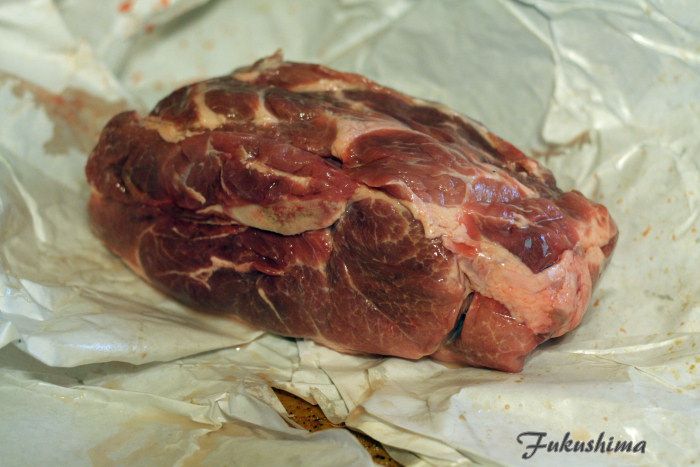
I was going to be running the UDS today, and since it makes little sense to run it for just one piece of meat, I decided to add some pork to my cook schedule. And since I was doing that, why not do a little creative cooking. So I found a really nice pork butt, took off a couple pounds for making char siu and the rest would be cooked to make Pulled 'Carnitas'-style pork. This meant the butt would be smoked with no rub at all. Here it is, ready to do, such an easy preparation. My friend Sir Porks A Lot would be proud, no rub.

Pretty much that is ready to go

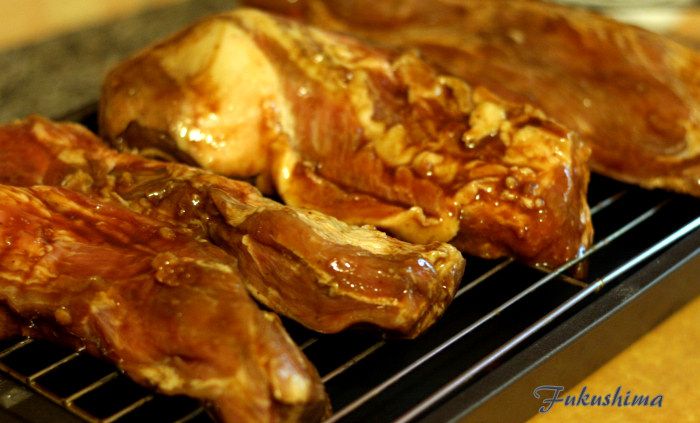
Strips of marinated pork butt


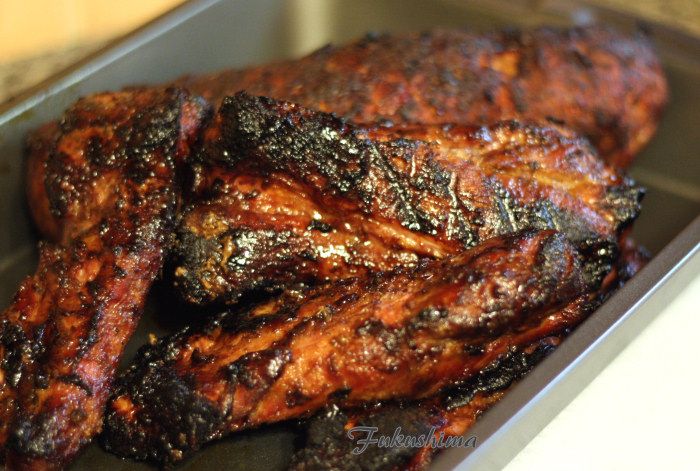
The other parts received a marinade, so it could be smoked up as char siu (Chinese BBQ Pork). This was done the night before and allowed to rest over night in the fridge. Then it all went onto the smoker, at 250F for 2 hours. Then the butt went into a Dutch oven that had 2 stalks of celery, 5 stalks of green onion, 1/2 yellow onion, 2 limes and a few cloves of garlic. Covered and back into the smoker. Started at 250F, but, I had opened the intakes to ramp up heat. After an hour, things were at 275F and the char siu was colored up and ready to come off. Along with the marinade, 3 hours of smoke left these tender, juicy and beautifully colored. I did remove the cover from the DO, so the liquid would evaporate. The Char siu worked out great, so great, I decided to snack on it and ignore the smoker.

Hunks of char siu, and a turkey loaf

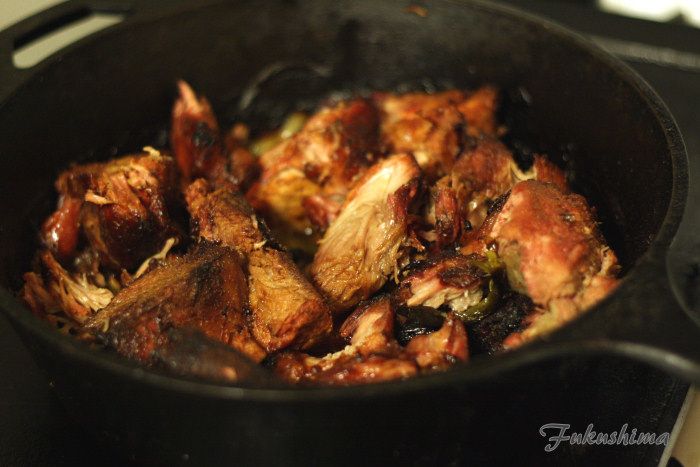
Did I mention the turkey loaf? No? Well, maybe because it sucked! Dry as popcorn farts! But that Chinese BBQ Pork was great. Onto the Phase Two, which I had forgotten about, the cooker had spiked wickedly hot, got it controlled to 375F, but, that was for two hours. No problems, as it turns out, BBQ is just not a 'down to the second' process. Around four hours, I removed the bone and around 5 hours the pork had rendered down into chunks of tender, caramelized pork.

Looks pretty good

Texture and flavor are right where I wanted them. These shred easily, but, hold their form rather nicely when handled. The flavor is savory and well balanced with the lime adding some nice sweetness as well. These will probably end up as dinner tomorrow.

Char-siu marinade:
2 tablespoons Hoisin Sauce
2tablesoons Soy Sauce (dark or regular, not light and never lite)
1.5 tablespoons whiskey
2 tablespoons Agave syrup or glucose syrup
 1 teaspoon salt (which I forgot to add)
1 teaspoon catsup
1.5 tablespoons minced garlic
1/4 cup honey

Mix first seven ingredients and place in a sealable pan or zip sealing bag. The honey is to glaze the pork in the last 15 to 30 minutes of the cook.

Bone a pork butt, you can use up to 2 lbs of meat for this amount of marinade. Cut boned butt into 3" thick strips. Try to remove large hunks of fat.

Saturday, April 6, 2013

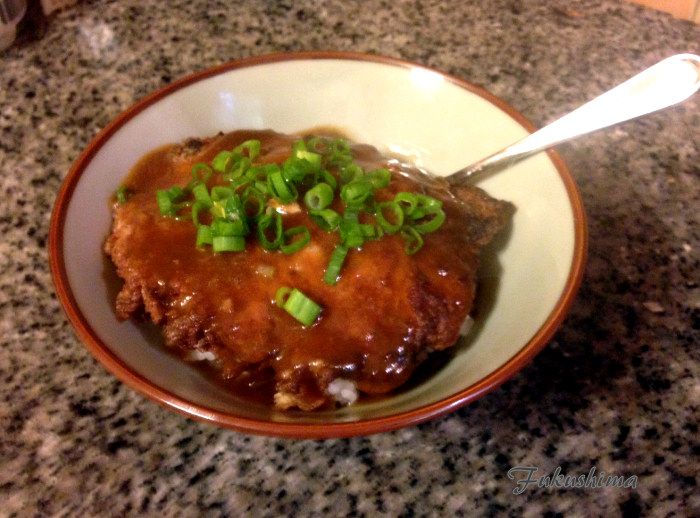
Egg Foo Young, nuthin' fancy here

Tonight, nothing fancy, if you grew up in 1960's or 1970's America, you knew this dish. It was a staple of the Cantonese restaurants the popped up throughout the vernacular landscape of America. Like Chop Suey, these were dishes that were more typical to America than to China. Yet, this is the place I grew up, and this is one of those dishes that define comfort for me. In truth, it is an simple, hearty and delicious plate of food, something people doing manual labor would welcome.

Old-style Comfort, Chinese-American style
 
My version, like the original features egg as a binder and the main protein, a small amount of shrimp for taste and aroma and a load of vegetables. A normally simple brown gravy would top this dish, I kinda riffed on that, as I had a few things to use up.

Egg Foo Young Egg:
3 XL eggs, whipped
1.5 teaspoons flour
1/2 teaspoon baking powder
1-2 dashes dark soy sauce
1/2 teaspoon Hoisin

Combine all ingredients, let sit at room temperature.

Egg Foo Young Filling:
3 stalks scallions, green sliced, white chopped, separated
2 cloves garlic
1/2 teaspoon grated ginger
1-1/2 cups bean sprouts
2 Shiitake mushrooms coarsely chopped
1/4 cup finely diced celery

Toss all ingredients in a hot wok to wilt vegetables. Limp but still with a little crunch. Remove and cool. Add to egg mixture.

Egg Foo Young Gravy:
1.5 cups chicken broth, or water
1 teaspoon beef base (or demi-glace, go crazy!)
1 tablespoon Dark soy sauce
1 tablespoon Hoisin, or half/half Hoisin and Doenjang (fermented bean paste)
1/2 teaspoon fish sauce
1 tablespoon rice wine vinegar
1/2 teaspoon agave syrup or glucose syrup
3 tablespoons cold water
2 teaspoons corn starch

Heat first 7 ingredients up to combine to a low simmer. Once it is at a simmer, combine cornstarch and water, add to other ingredients and simmer to thicken.

Too cook the omelets, I like to add a little bit of the egg to coat the vegetables, and keep the rest of the egg mix separate. Using a wok, add 1/2 inch of oil to the bottom, you may need more as time goes on. Add 1/5 of the vegetables to the hot oil and pour some of the egg over the vegetables. Let it fry over low heat until the omelet forms on the bottom. Add a little egg mixture to the top and flip over. With a little practice, this is easier by flipping the wok. Cook until golden brown. Store under a low broiler and repeat process until done. Serve over rice.

Friday, March 29, 2013

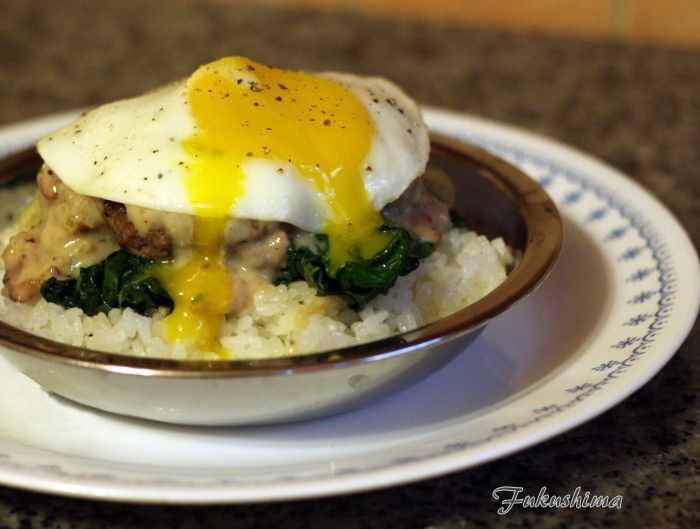
Loco Moco, with a twist

Hey, it's Hawaiian food, the most natural Fusion cuisine in the world, they have borrowed from just about every cuisine in the world, to come up with something that speaks just to the island. But, I wanted to try out a new rub, then there was the fact that this dish normally lacks any vegetable matter at all. I was going to eat this for dinner, so it needed something. I came up with this.

Da' Grinds!

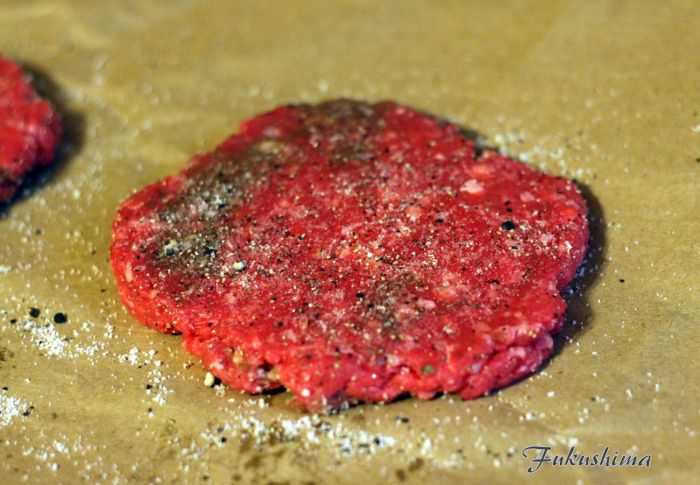
For starters, you need some rice, easy enough, standard Japanese rice cook implemented, then the hamburger patty. I went with a local source, grass finished Northcoast beef, with a rub from Ted & Barney's. They are a local Humboldt County butcher shop turned rub merchant. In the bottle, it looks a lot like salt and pepper and not much else. I figured it would be close to a Santa Maria-style rub. I seasoned the meat, with what I thought was too much rub, small shaker mishap, as it were. Still forge on, assume it will be too salty, I guess. Let the rub sit for a bit, while other prep work was done. A little Japanese, a little American, a little Humboldt County influence.

Too Much Rub?

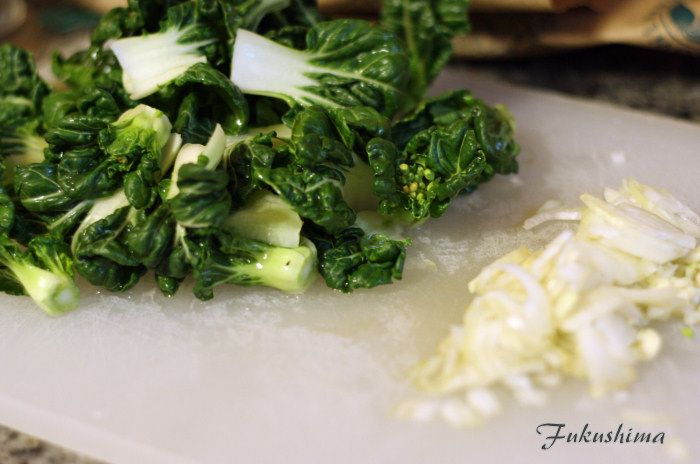
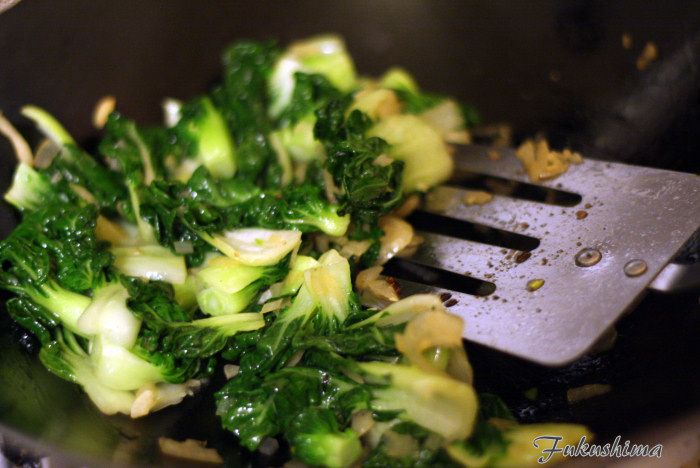
I also wanted those greens, so I prepped up some baby Pak Choy, some yellow onion and a couple cloves of garlic. This was to be a fairly simple stir-fry, really trying to let the pak choi shine with a little garlic kick. California/Chinese influences here.

See, Healthy

Done, still crispy


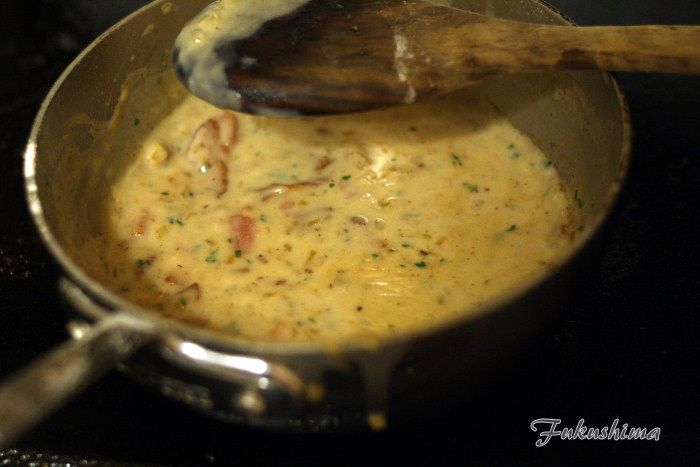
Then there was the gravy, normally it should be a beef stock/base type of gravy preparation, but, that would be too easy. So, I went with some bacon ends for fat and flavor, and cooked them slowly to aid in building a fond in the pan, then flour, onions, lots of black pepper, and parsley were added to create some depth of flavor. A mixture of 25% milk and 75% water to bring the gravy to the proper thickness. Going for the Southern influence here.

Mmmm, not so healthy

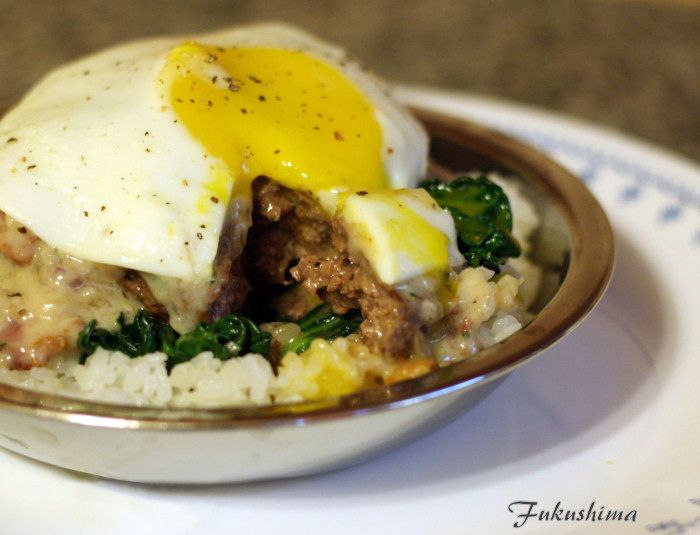
From there, all that was left was assembly, a ring of rice, the pak choi in the middle, then burger, gravy and the required fried egg on top. I have to say, I decided to test a chunk of the second burger plain, and the Ted & Barney's rub was surprisingly not over-applied, it was nicely balanced and for something with just four ingredients, it was more than the sum of it's parts. I will probably go ahead and try it on a tri-tip at some point. It will definitely have a spot in my rub box.

Standard blogger too close to the food shot

I love runny eggs and rice, the seasoning on this was spot on, with the simple greens adding both a needed crunch and vegetal edge to the dish that is otherwise lacking. Overall, even as it is a Fusion dish, apparently a dirty word in professional kitchens, each of the flavors was well developed and individually strong, but, added to the whole. It's good eating, sort of Island-style.

Friday, March 15, 2013

Smoked Pork Rib Ramen

What to do with leftover ribs, especially after eating them for two meals. Well, I like to make a basic broth from smoked meats from time to time. So, ramen seemed like a good idea, and it would be lighter than how I have been eating. A good choice all the way around.

A Bowl of Noodles
 
Although many ramen snobs of late love to talk of the noodles, the key to me, for a great bowl of ramen comes down to the broth and the tare. One of the problems with using smoked meats for broth is that they actually produce an overly smokey, and consequently, simple tasting stock. Things need to be added. I built the broth with the use of blackened scallions, ginger, garlic, three bones of the smoked ribs, and a few flavor enhancers.

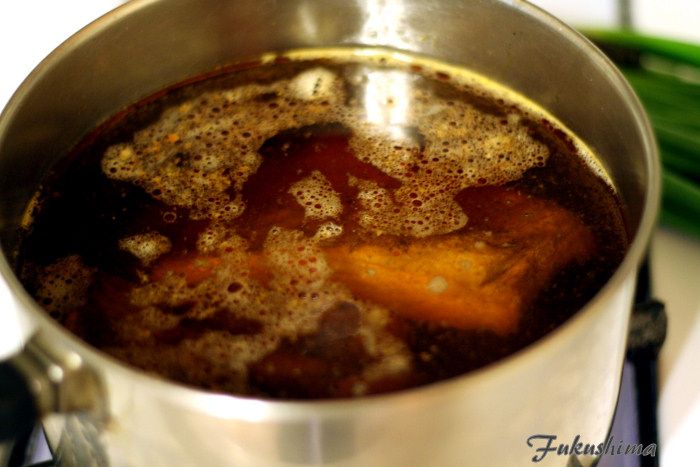
I started with 3 bones from the leftover rack of ribs, these were boiled at a full boil for 15 minutes, water being added as needed to keep the pan filled. As could be predicted, the resultant liquid was smoky and porky, two high notes then nothing. I had blackened some scallions, the white parts only, to add a bit of depth and color. The entire bunch was blackened then coarsely chopped and added to the broth.

Need more burn!

I decided to go a little more fragrant, so added 2 cloves of garlic, cracked, and about a teaspoon sized chunk of ginger, smashed, as well as 3 shiitake mushrooms. This was all reduced to simmer for 15 minutes, then an additional layer of flavor, in the form of shoyu and fish sauce, about 2 tablespoons of each. This last addition was both about salt and umami. That being done, I added 1 cup of the broth to a small pan, added in four shiitake, 1 teaspoon of Agave syrup, 2 more tablespoons of shoyu and a teaspoon of Tonkatsu sauce. This was both to cook the mushrooms and make the tare, a flavorful syrup, which adds punch to the broth. I reduced the tare by 2/3, once the mushrooms were cooked and removed. At that point, I added some toasted sesame oil, just a little.

The Broth, about halfway there

The Tare, ready to go

From there, it was time for the other elements...
 Shiitake mushrooms braised in tare


Wilted bean sprouts

Kale, braised in broth

The mushrooms were slice, the bean sprouts wilted just enough to reduce the beany quality they can have, although these were quite fresh. The kale was a last minute substitute. I had wanted Mitsuba, but none could be found, so I wanted Mizuna, which I found, but, when I opened up the bag, it was bad, so on to the kale, which was leftover from last week, and which apparently does not go bad very fast at all. Things were assmebled in the bowl, along with a few shreds of the ribs.

Ready to be drowned

From here, just pour the broth on, add the tare and I opted to add some rayu (spicy sesame oil) and Yuzu-Pao, sort of a Sriracha with Ponzu added condiment. I add the tare both before and after the broth, the get more flavor into the mix.

The Broth shot-payoff time

Hopefully, you can see that the tare is still coating some of the toppings, and you can see the broth has a nice color. The overall effect was of a rich, lightly spicy and complex broth, supported by vegetables and noodles. I have not talked much about the noodles, although I love hand made noodles, I truly believe that chuka soba barely cooked, or fresh chow mein noodles from the store do just fine in supporting the broth and tare. And as for the kale, it worked great in ramen, who knew?

Sunday, March 3, 2013

Gyoza Night, home made skins

So, I decided to make gyoza, that most famous of Japanese dumplings. And to make it more interesting, I decided to make it with home made dumpling skins. I have a couple of recipes, and it could not, on the surface, be any easier. A basic hot water dough and some quick kneading. The dumpling skin is based upon a rather simple Chinese noodle recipe, that involves nothing more than water and flour.

Dumpling Skins:
2 cups all purpose flour + 1/2 cup for dusting and such
1-1/4 cups boiling water

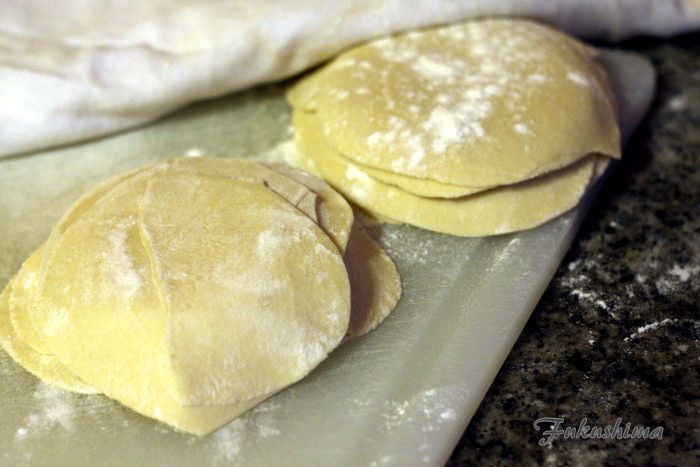
Basically, after boiling the water, I added about 3/4 cup of the water to the 2 cups of flour, mixed this together to form a dough, I found that I needed about 1/4 cup more of the water I had allowed for. Once this came together, and it is a dry dough at this time, I turned it from the bowl and kneaded it for around 4 minutes (this was a mistake). Once this became somewhat smooth and elastic, I divided into halves and wrapped in plastic to rest. After a one hour rest, I rolled each half into a long snake, and evenly cut it into 24 pieces. Here is where I got lazy and gave into the call of my KitchenAid pasta rollers. Each piece was rolled into a ball, given a quick smash by hand them rolled through the machine. I should have gone thinner, more on this later. Here is what I ended up with.
So Far So Good

They are far from perfect, hey, it is my first time. Lessons learned, I over kneaded, the gluten just would not relax, the dough was a little tough. Also, I prefer a thinner skin than these, the problem was that gluten. I think next time, I will knead for maybe 1-2 minutes.

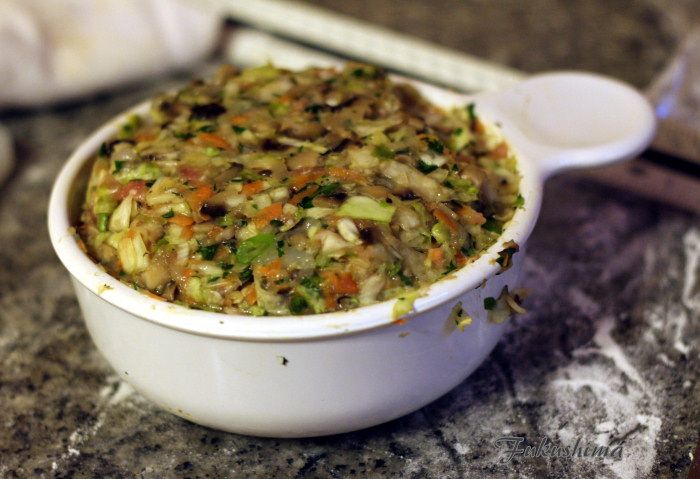
To the stuffing, I originally thought these would be vegetarian, but, once I decided to go with home made skins, I ditched the experimental vegetarian stuffing and went with my usual pork and shrimp dumpling stuffing. Essentially, just a load of veggies, ground pork and finely minced shrimp. I prefer the texture a little loose, so all the vegetables are hand cut.

Dumpling Filling:
1/4 pound ground pork
1/4 pound wild shrimp, finely minced
2 cups chopped cabbage
1/4 cup finely chopped carrot
1/4 cup finely chopped scallion, white parts only
5 medium Shiitake mushrooms, finely chopped

3 tablespoons Mitsuba, Parsley or Cilantro
1-1/2 teaspoons corn starch
2 cups water
3 tablespoons shoyu
2 tablespoons sake
1/2 teaspoon sugar
1 teaspoon Red Boat fish sauce

Mix the cornstarch, pork and shrimp together. Set aside. In a small saucepan, combine liquid ingredients and add mushrooms. Bring to a simmer and simmer for 5 minutes. Remove mushrooms and finely chop for stuffing. Reserve mushroom cooking water. Combine all vegetables, mushrooms and meats, season with 2 tablespoons of the mushroom cooking water that has been reduced by half. Set aside to cool.
Dumpling Filling

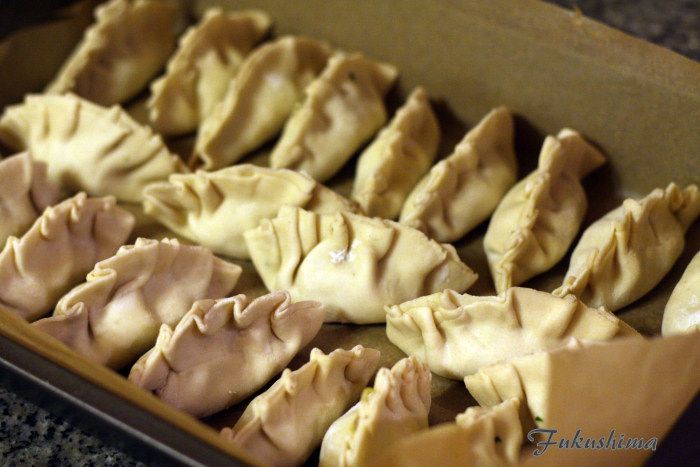
From here, the assembly goes painfully slowly if you are me, and it goes quickly if you are one of those dexterous people. You can see that the filling I use is a coarser texture and it not as agglomerated as many commercial versions, I like the texture and the way the flavors are not all mashed together in a food processor. In any event, except for the over-developed gluten and thickness, it was a lot easier to work with fresh wrappers. They folded and sealed much better and once I get the kneading down, this is the way to go. Here they are all in all their rustic, irregular glory.
Into the pool everyone

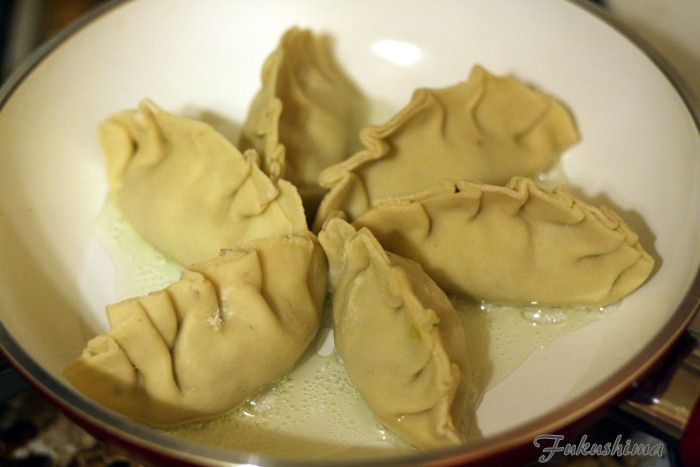
The process from here, is pretty straightforward as well. I used a very good non-stick pan, I like the Bialetti pans, best non-stick I have found. A little oil to brown the bottoms of the dumplings, then once brown, throw in about 1/4 cup of water and cover to steam.
Browning nicely

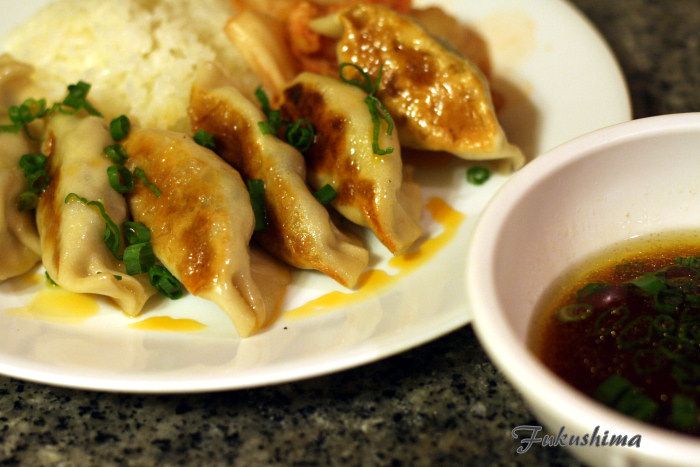
I ended up using two pans, and this went pretty quickly. The overall cook went exactly as expected and the dumpling skins cooked up as expected. Despite their obviously excessive thickness. I also think I don't like the folds on my gyoza, won't do that again. Still, it was good food.
Gyoza, Kimchi, Rice and Dip

A nice dipping sauce was assembled using the mushroom cooking water, some vinegar and a little extra sugar, and a dash of sesame oil to add body. Some chopped green onions were added as well. On the plate, you can see I drizzled some Togarashi Rayu oil over the gyoza, I also decided some kimchi and rice was in order. I love the sweet/salty/savory/heat that rolls through the palate with these combinations of foods. The kimchi also brings sour and crunchy to the plate, really hitting all of what we love in food to the plate.
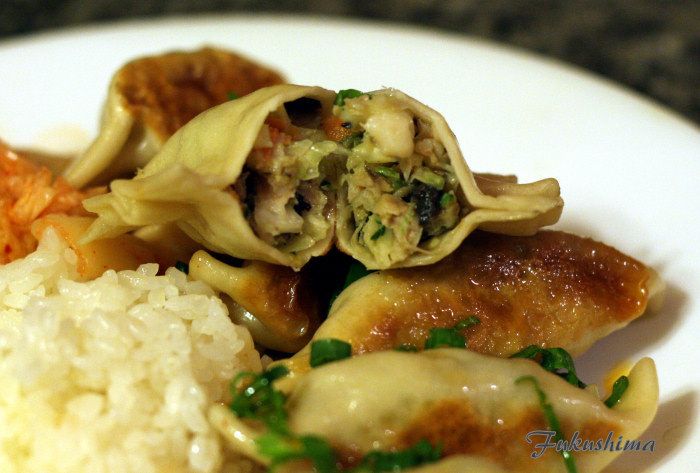
In Section

'Here you can see the thickness, this is actually acceptable for things such as potstickers, but, I prefer a thinner skin for gyoza. Still, the texture was excellent and the flavor was right there. The overall taste was balanced with the vegetables being up front and center, the meat added depth and complexity. Overall, this was delicious, the next batch, I know just where to go.