Search This Blog

Thursday, February 21, 2013

Tri-tip Tsukemen

Well, now that I am once again running my smoker, I found some time to make a couple of tri-tip roasts. I smoked them (see that process described here) and tried to keep them fairly rare to medium rare. One of them had great marbling, and this gave me the idea that it would be great eaten sliced paper thin and eaten on the cool side, Tsukemen came to mind. For those not in the know, Tsukemen literally means 'dipping noodles', and it is a relatively recently developed style of eating ramen.

Unlike the ubiquitous ramen known to most Americans, tsukemen does not lend itself to packaging in small cellophane packets, and since it is a combination of cold noodles and hot broth, it is not as common and the more accessible hot noodle soup most of us think of when the word ramen is mentioned.

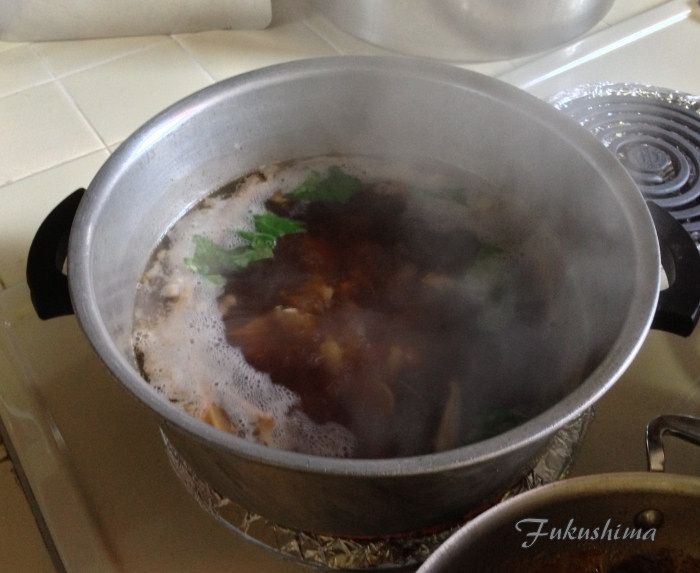
First off, I prepared a nice soup, this needs to be a strongly flavored soup, as it will be the primary flavoring for the dish. I took 3 cups of water, 1/4 cup of shoyu, 1/8 cup of Red Boat Fish Sauce, a teaspoon of agave syrup, a chunk of smoked brisket fat, about 3 to 4 ounces of the hard bark and fat from a previous cook and adding all of these together, I brought it to a boil. To this, I added the peels and trimmed ends from a large carrot, and some green onion trimmings. At the last minute, I added some Rayu Sesame Oil, a spicy oil that is also quite aromatic. This broth was then sprinkled with Mitsuba (called Japanese Parsley by some) and sliced scallions.
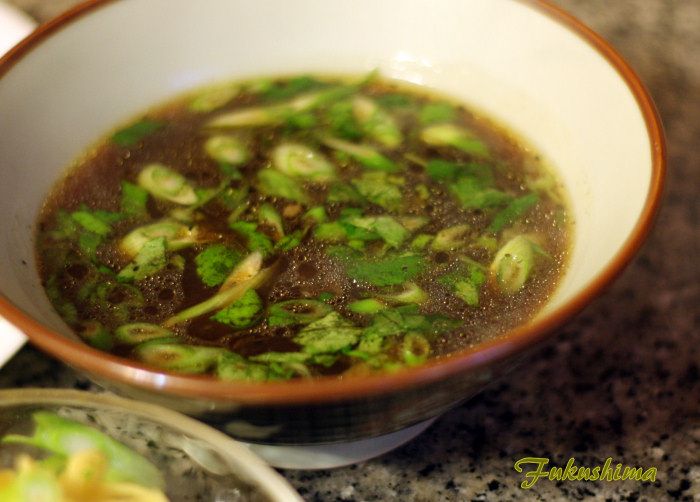
The Broth served very hot

In the end, as you can see, there was a little over 2 cups of the broth. Next was the boiling of the noodles, in this case, I was able to get some fresh steamed Chinese alkali noodles, used often for making chow mein and similar types of noodle dishes, it is a great analog for the ramen noodles used in Japanese cookery and is more easily found. These were boiled until just cooked, then shocked in an ice water bath. For this dish, the noodles need to be rinsed and chilled, the ice water bath does this quite nicely. Nobody wants over cooked or gummy cold noodles. I also sprinkled a little sliced scallion onto the noodles.
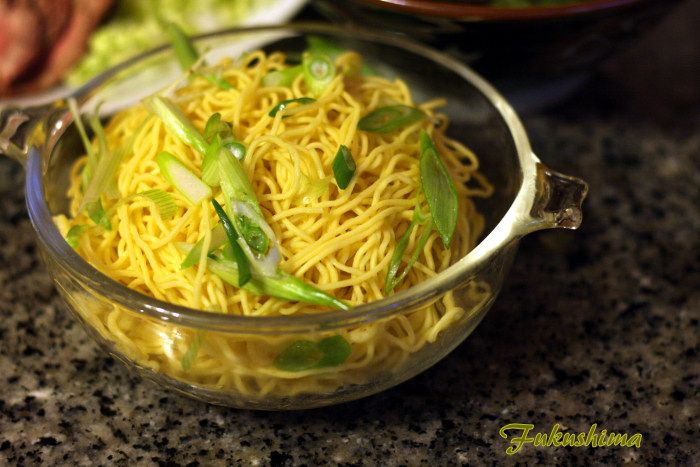
Chilled for serving

Finally, the only thing left was to prepare some vegetables for use in dipping with the noodles. This is almost like preparing a salad, without the dressing. First, the aforementioned paper thin slices of tri-tip, yes I am liking my new meat slicing knife. Then some blanched julienne of carrots, some blanched bean sprouts, some raw Nappa cabbage and some mushrooms that had been boiled in the soup, to fortify the dipping soup and soften the Shiitake mushrooms. I was really happy to see that the tri-tip had retained both it's marbling and was quite close to rare. This made for the perfect texture once it was dipped in the very hot soup.
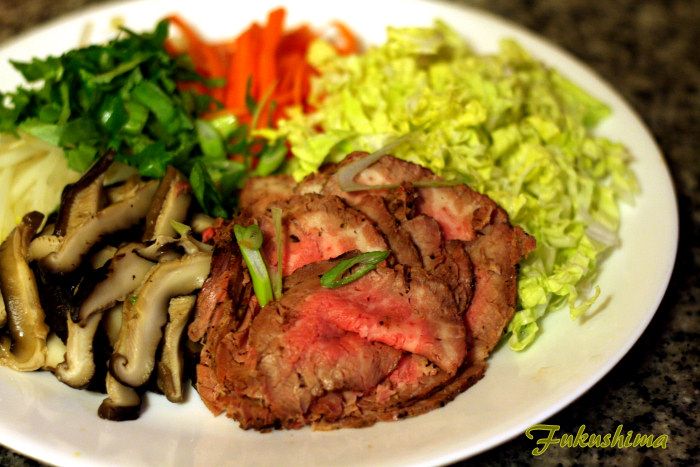
The Accompaniment

Unlike most ramen dishes, I believe Tsukemen has no single great note, all of the ingredients must be right for the overall dish to really sing. In blanching the carrots, I am trying to soften the thin julienne just a bit, and start the process of brightening the sweetness, the bean sprouts are heated just enough to soften that beany quality, but, to maintain most of the crispness. This dish ends up being all about the contrasts of the hot and cold, sweet, salty, herbal and savory and about the textures, at first crisp, or tender, lean then fatty, it is a wonderful dish that is not well known enough here. I tried to get a dipping shot, however, I am right handed and cannot use hashi left handed, nor can I apparently focus my camera using my left hand only. Almost...
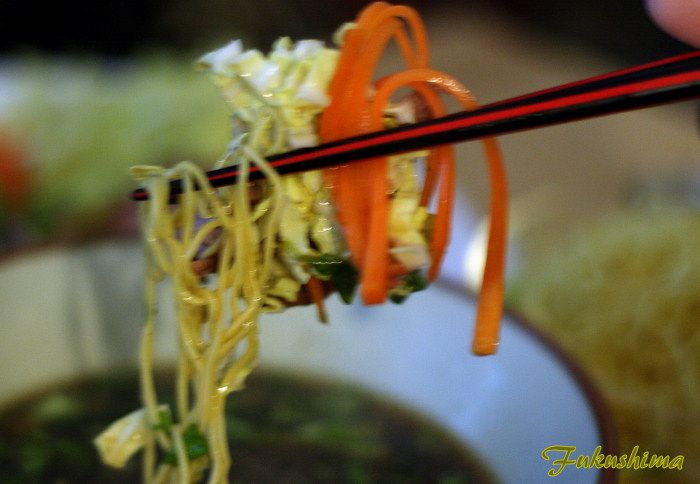
Focus!

Ah well, that is clear enough to illustrate how I eat it. Others eat it the more normal way, of eating the noodles or the vegetable and meat separately. It all works great. I like to shove it all into the bowl, the grab the whole lot and then eat the whole mess at once.
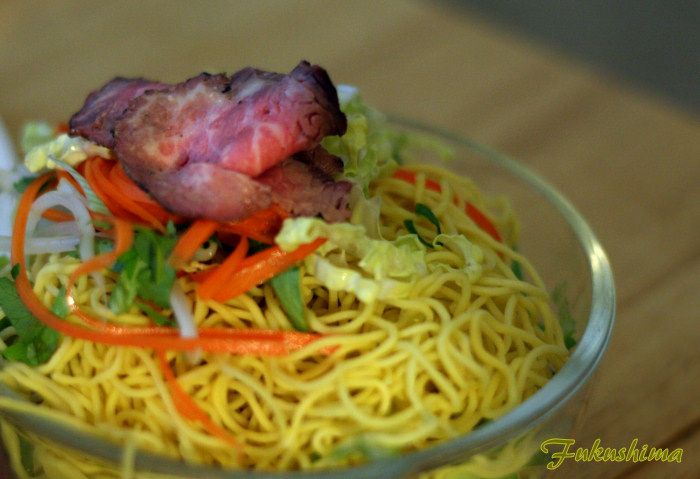
Ready for the Dipping

Overall, a nice dinner, without too much gluttony. I think I get a Girl Scout cookie as I ate lots of vegetables.

Monday, January 7, 2013

Soup and Noodles

More specifially, soba and ozoni, the two dishes that my family has traditionally eaten to signify the end of the old year and the start of the new one.

Soba, a buckwheat noodle, has become familiar to many people in the United States as a cold noodle dish, often spice boldly and served dry. In Japan, the hot version is traditionally served at the end of the year, at midnight, with the cutting of the noodles as you eat them being symbolic of the severing of the old year and the beginning of the new year. There are many types of soba noodles, plain and flavored, and I have bought many of them, as I do not read Japanese and tend to buy what appeals to me. How this makes sense with dry noodles is unclear to me, but, there it is.

First off, is the broth, now, it is easy to go ahead and just use a product called Memmi, a pre-made soup base specifically for soba, but, since we have all the ingredients going already, we like to make out own. Actually, this year, I bought a fancy Memmi, and decided I would 'double' it with a few additions. So, into the pot went the original bottle of Memmi, along with 1 cups of water and 2 cups of dashi (bonito/konbu broth), 1/4 cup mushroom water, 1/8 cup shoyu, 3 shiitake, 1 bunch of Mitsuba, a few slices of ginger and a heavy splash of sake and 2 tablespoons sugar. This was all brought to a simmer and then turned off to cool.

Soba Stock
About the mushroom water, I like to use dried mushrooms to add depth to many dishes, I also believe the dried mushroom makes a superior pend product in braises and futomaki. Thus, I will soak a couple of packages of mushrooms in a quart of very hot water for an hour. This water is filled with flavor and finds it way into many dishes. Now, back to the soba. We simply boil up the soba per the unreadable directions on the package, taking care to guess when they are properly done. Soba cooks faster than wheat noodles, it also disintegrates faster than wheat noodles. But, we managed to get it right. Plating is as simple as placing a handful of warm noodles into a bowl, pouring some soba stock over it and sprinkling with fresh chopped green onions.

Midnight Soba

This is not your traditional lightly flavored soba, it has a bit more punch, and the stock ends up with more depth, to satisfy my desire for a complex flavor. It is a good way to end the old year.

And for the New Year, we have ozoni, a soup that has, over the years been something of a challenge for the non-Japanese folks that have joined our family. It turns out that mochi is not a universally loved texture amongst all cultures of this planet. I happen to love grilled mochi, which is the center piece of this dish. Oh well, here is the mochi all grilled up and ready to go.

See, little mochi, no big deal

The stock for this soup is actually built on a chicken broth, in the case of our modern take, we lace it with ginger, garlic, sliced shiitake and Mitsuba to develop flavor. Then the soup is seasoned through the use of sake, shoyu and dashi to add complexity. There are few flavors and even fewer times when a strong flavor is meant to dominate in these traditional dishes, in many cases, the variations of shoyu, sake, dashi and herbs is all that determines a good dish from a bad one. Once the broth is right, we added the Mizuna.

Organic Mizuna

Interestingly, this year, we found some organic Mizuna that looked fantastic, so leafy and fresh, we had to taste a bit to be sure it was the right stuff. It was, a bit of a spicy, definitely herbaceous herb, related to the mustard plant. We chopped the stems and added to the broth just moments before serving. This was a dish I hated as a child, wanting only to eat the grilled mochi, but, as an adult, it has become not only a delicious dish to be looked forward to, but a touchstone for me, hearkening back to times shared with people I have lost over the years. It is warming, delicious, comforting and bittersweet, the other four food groups I suppose.

To the lifeboats, oh nooo...

And into the bowls, the soup serves, with it's load of spring herbs to hearken to the New Year, it is symbolic of a new beginning. It is also symbolic of strength, much like the strength of herbs that fight through winter to bloom in Spring. We forgot to add the daikon, which is my fault, as I made the soup and don't like Daikon. Meh! In any event, there is our first two meals.

I would be lying if I didn't mention that I deep fried a couple of those mochi patties and ate them while ostensibly cleaning up the kitchen. Mmmm, nutty, crispy fried mochi with Satoshio.

Friday, January 4, 2013

Teriyaki Chicken

One of the staples, and the dish that has become my contribution every year to the New Years table is Teriyaki Chicken. Now, my recipe is, by no means traditional, or authentic, and as is typical to my style of cooking, I could care less about "authentic" cooking. All cooking is local, and this is my interpretation, a fusion of my grandmother, mother, restaurant and my own free-wheeling attitude.

To start, you will need a good strong dashi. The addition of a little reduced dashi broth brings that hit of amino acids you get from konbu and dried, smoked bonito. I like to reduce 1 cup of dashi by half, then add this to the shoyu and sugar. I do not like to heat the marinade, but, I have made a few adjustments to allow for this.

Teriyaki Marinade:
2 cups Shoyu (I used Yamasa Brewed, but, Tamari is great too)
1/2 cup reduced dashi
1/2 cup agave syrup (adjust for sweetness desired)
1/4 cup sake
1 tablespoon grated ginger
1 tablespoon grated garlic
1/2 teaspoon togarashi sesame oil

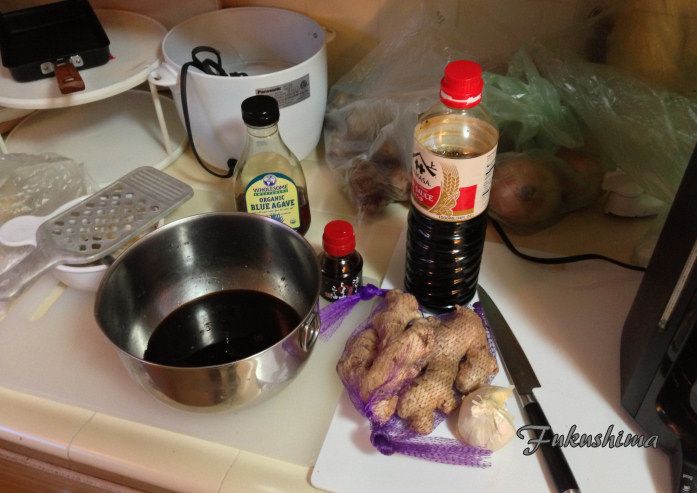
A few of the marinade ingredients

Mix all above ingredients at room temperature. Do not heat. I believe that heating at this stage muddies the flavors of the elements in the marinade. I check for taste at this point, I want the marinade to be moderately sweet, but, showing lots of complexity. Too much sugar at this point overpowers the other elements. The overall sensation should be a taste that starts off salty, moved to aromatic and snappy, finishing with sweet and heat.

A note about the chicken I use. I strongly prefer the use of quality poultry for this dish. I buy field raised air-chilled chickens for this use, and I avoid the large packer products. I feel that the air-chilled chickens take the marinade better. I place the chicken in a vessel suitable for marinading the meat overnight. This can be zip closure bags or it can be a glass or plastinc container, best if it seals liquid tight though. I like to let the chicken marinade overnight. At least 8 hours, if you must rush it. I will flip and turn the chicken to make sure the marinade is moving around the meat for good coverage.

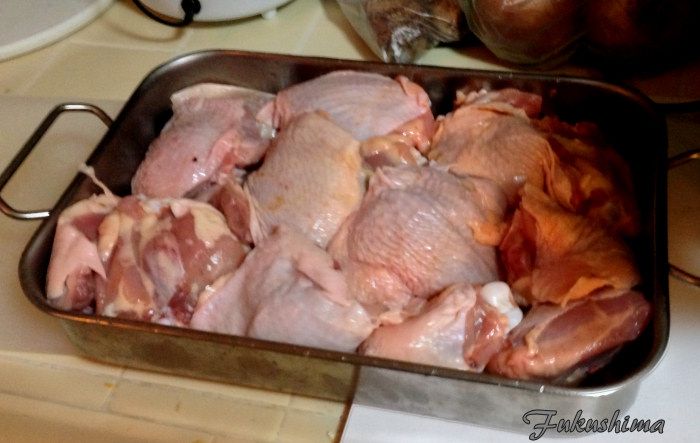
Chicken Thighs await

A good alternate, one I learned when I did large cooks for the church bazaars that we used to do, is to actually pack the chicken in rock salt, coarse rock salt that works to pull the liquid out of the meat, then you can put it in the marinade for just a couple of hours. This is better and far more efficient, when you are cooking 300-500 chicken dinners. The rock salt will not flavor the chicken, it just pulls moisture and sets up the process of the chicken pulling the marinade into the meat.

Anyway, once it is marinaded, place the chicken in a pan, and place it in a 400F oven (or smoker/kettle/wood burning oven) and let it run for 45 minutes. Do not crowd the chicken. I happen to prefer cooking the chickens in a pan, as opposed to on a rack, as I feel it gives me a moister product. Meanwhile, prepare another batch of the marinade, but, triple the agave syrup, or use honey instead. This forms your glaze. I like to heat this batch to around 180F and let it sit at that temperature for 5 minutes or so. It combines into a glaze. This is brushed onto the chicken about 15 minutes, and again at 5 minutes before the chicken is pulled. It gives it an almost lacquered look.

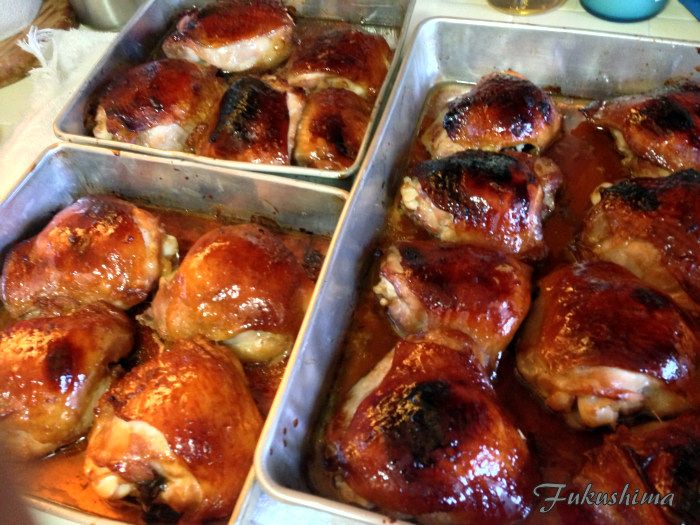
Oooo, shiny...

That is not photoshopped, those were really that shiny and they were not sticky at all. And yes, perhaps I got distracted and was a little tad late pulling them from the heat. The chicken was cooled and packed, the grease and drippings were drained into the 'mother dashi' as nothing was to be wasted. For Osechi, the chicken is normally eaten at room temperature, so it is important that the flavor be balanced for eating at a colder temperature, the marinade I use has plenty of depth and complexity, there is the characteristic sweetness on the skin while the chicken still shines through. It is nothing like any store bought candy chicken sauce.

Thursday, January 3, 2013

Braised Pork Belly

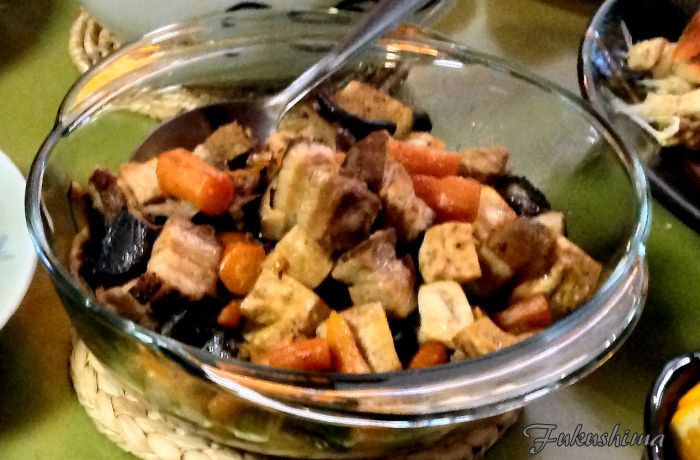
One of the newer dishes we have added to our New Years celebration is a braised pork belly dish, it started off as a lark, and with me wanting to play around with how pork belly might be best cooked. But, what I realized is that using very similar flavors to what we already used as a base for Oden, I could develop a separate stew that was quite delicious on it's own.

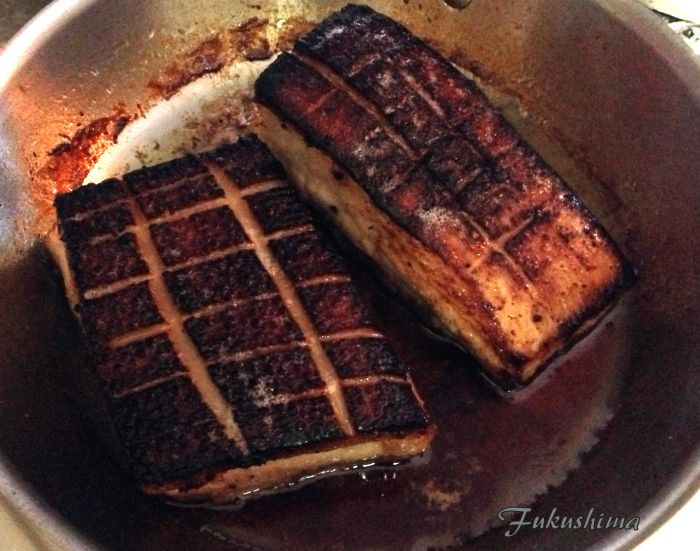
I start by marinating the pork belly in a mixture of grated ginger, grated garlic, finely diced green onion, shoyu, mirin (or sake and sugar) and a splash of Togarashi sesame oil. The pork belly is scored lightly on the fat side and then placed in a plastic bag with the marinade for 8 hours. I then seared it in my braising pan and cooked it on it's own in the over, uncovered, for 1 hour at 350F. This started the rendering process and gave it a great color.

Caramelized and rendered

From here, the belly was chopped into small-ish bite sized pieces and reserved. The pan was deglazed with more sake, Some finely chopped onion was added, then some pieces of carrot, and tofu. This was then tossed in the pan to pick up some of the liquid, the pieces of belly were returned, along with some shiitake mushrooms. I used dried mushrooms, which have a deeper flavor which works great in this application. I also added some of what my sister kept calling the 'mother dashi'. By the time I was done, the pan was quite full, I only used about 1 cup of the 'mother dashi'.

About the mother dashi, I will get a post together about it. But, for the moment, what it really represents in the frugality of not wanting to toss away any flavor. Japanese food really relies upon the manipulations of just a few elements; bonito, shoyu, sugar, sake, ginger, onion, and the foods that are cooked in them. So much of what we cook relied upon these flavors in various braises and steeps. Over a 48 hour period, we make and use so much of this, we decided to just put it all into a stock pot which stayed at a low heat, just around 180F, so as we prepared fillings for futomaki, or oden, or soba etc...all the fluids ended up in that pot, even my teriyaki drippings ended up in that stock.

On to the end product...once out of the oven, where it was cooked at 400F for 2 hours, the braise resulted in silky belly pieces that were laced through with an unctuous, salty, sweet, umami laden sauce. The tofu and mushrooms picking up that flavor, each texture well defined. I could have done most of this on my Weber kettle as I did last year, using the belly as a smoked product, but, I was not cooking at home.

Chunks of Braised Fat

The end product. Although this dish uses chunks of pork belly, it is a lot lighter than it might first appear. The flavors are retained, everything has it's own texture and taste. The braise ends up as quite complex, with simple and limited ingredients as the carrier.

Wednesday, January 2, 2013

New Year's 2013

One of the most important holidays for my family is New Years. Although we have switched from the tradition of a the Lunar New Year, to the American New Year, we continue to observe and celebrate some of the traditions of the Japanese Observance. One of these is to gather with family and enjoy the day, as well as to remember the past year. This year, we were fortunate enough to again be joined by my two elderly aunts, the last of their generation in our family. Now both in their 90's, it was nice to have them there with us. My sister and brother and their families, along with cousins and friends joined us as well.

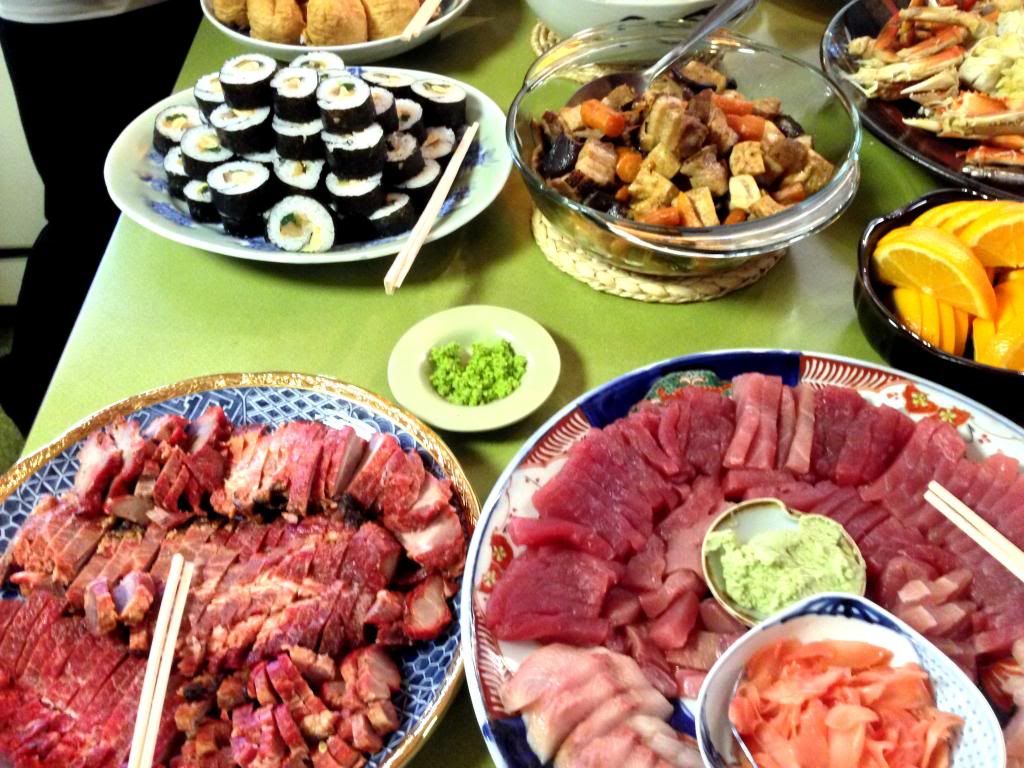
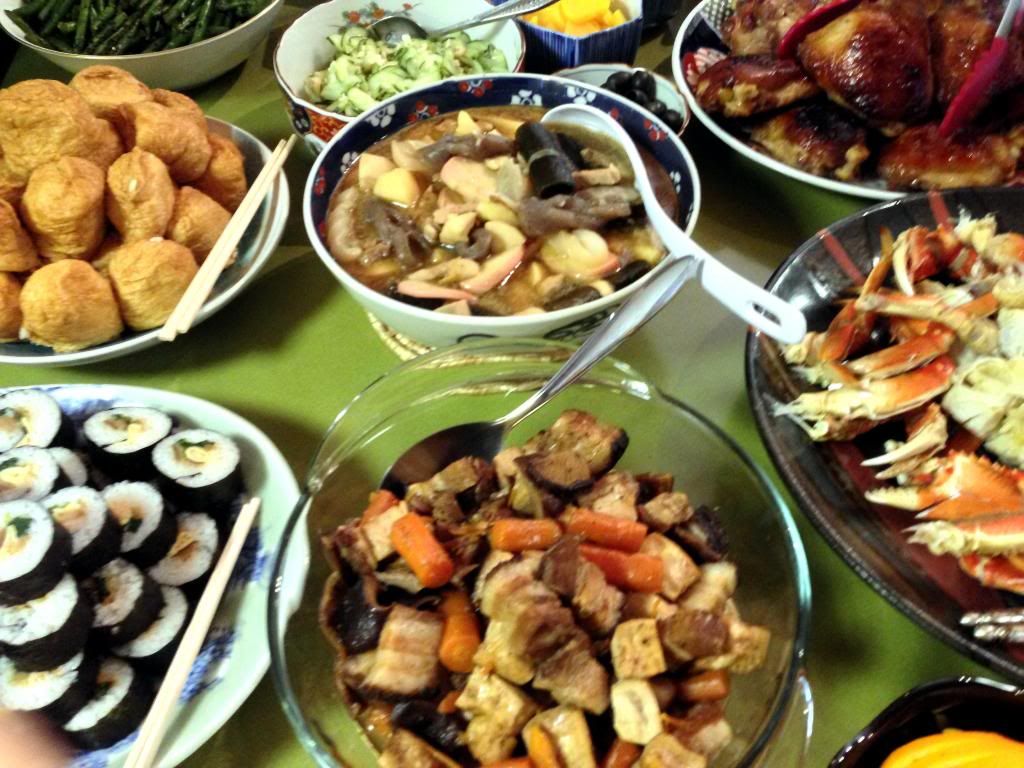
Although I will do a couple of more detailed posts, here is the small feast we laid out for New Years Osechi Ryori.


Here, you can see that there were a few meats, Chinese BBQ Pork (cha siew), some Maguro and Hamachi sashimi, Futomaki and Braised pork belly stew. That small dish in the middle is true fresh ground wasabi, nothing you have had, from tube or powder gets close.


In this picture, you can see that Futomaki (sushi rolls), along with Kitsune sushi (inarisushit), Sugar cured cucumber (Tsunemono), Oden (a fish stew), Teriyaki Chicken and some fresh crabs, and again, the braised Pork belly stew.

There were other dishes, such as kuromame, a traidtional food for good health, various salted and mirin-cured vegetables, most of which have some association with good luck or good health. Pork belly is a rarity, but, would have been most common as a winter food, as it would have been most common for slaughter to happen in late fall. The oden is another traidtional dish, and really represents Spring and rebirth, with the use of spring vegetables, such as bamboo shoots, fuki (coltsfoot) and renkon.

Tuesday, December 18, 2012

Latkes and Pak Choi

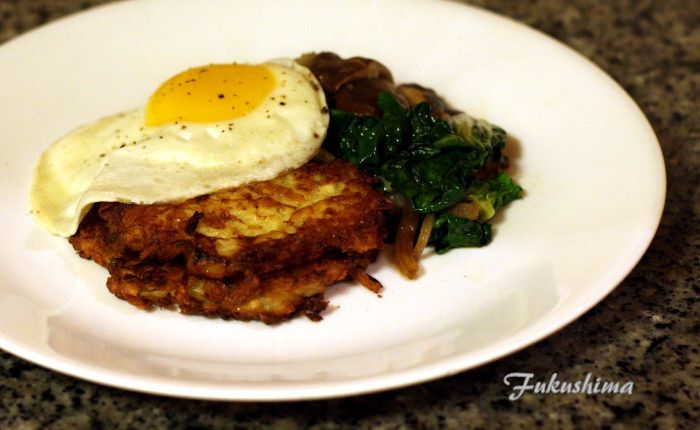
Well, it has been a while, just haven't been at the cooking thing enough lately. But, it is the holiday season, and where I grew up, this was always a mix of kids doing Hanukkah, Christmas and home cooking. One of the funny things that always struck me was the tradition that some Jewish families had, of going out for Chinese dinner on Christmas day. This dish, is an quirky way, is a synthesis of that fascination. Yes, the latke meets the wok.


The Latke...
I like to use an old recipe, that I found in an old issue of Bon Appetit, back when it was all about cooking. This recipe is long since altered beyond attirbution, plus, I have no idea the cook who wtote it down. I use a Microplane box grater now, which gives me wide strips of potato and a weird chunky mush of onion, which works curiously well. Anyways...

4 parts grated ribbons of potato
1 part grated onion chunky mush
1/2 part binder (properly, matzo meal, improperly, panko)
1 medium egg

Create a salty water bath, enough to cover the potatoes you are cooking. It should taste like pasta water. Grate potatoes into the brine and let sit for 15 minutes. Place in salad spinner and work until dry. Alternately, you can place the potatoes into a dish towel and wring it until dry. Immediately wash the towel or the starch will stain it lavender and gray, and not a pretty lavender and gray. Mix the next three ingredients with the now dry potatoes to make the 'batter'. It will be stiff.

Fry in 325F to 345F oil one each side, they should be golden brown and crisped. Since I prefer to shallow fry, I make then the 'batter' into balls then flatten once in the oil. Hold in a 300F oven while you finish the cooking.

The Pak Choi...
I like to use baby pak choi for this dish. By pak choi, I mean the ones with the white stems and dark green leafs. I wash and separate the stems from the leaves. I julienne the stems and set aside. The leaves are torn such that they are mostly the same size. Set these aside.

I use just a few slivers of yellow onion, sliced very thin, these need to be thin to cook fast. I also prepare shiitake mushrooms, for this dish, I wanted to use fresh mushrooms, as what I was looking for was the more delicate flavor and softer texture of small, fresh shiitake. Dried or larger ones are a little tougher and offer a stronger flavor, it is a tradeoff. Anyways...

6 to 8 baby Pak Choi, washed, stems reserved, ends trimmed
4 slices shaved from medium yellow onion
8 to 10 baby or small fresh shiitake, stemmed, washed

In a hot wok, add 2 tablespoons high heat oil (I used grapeseed) and coat wok, toss in julienned stems of pak choi, toss until wilted, add onion and mushroom, toss until onions melt and shiitake are cooked (around 3 to 4 minutes, unless you have a wok burner) toss in green parts of the Pak Choi and toss, adding 2 tablespoons of fish sauce and a little hot sesame oil. Toss for a minute and remove from wok.

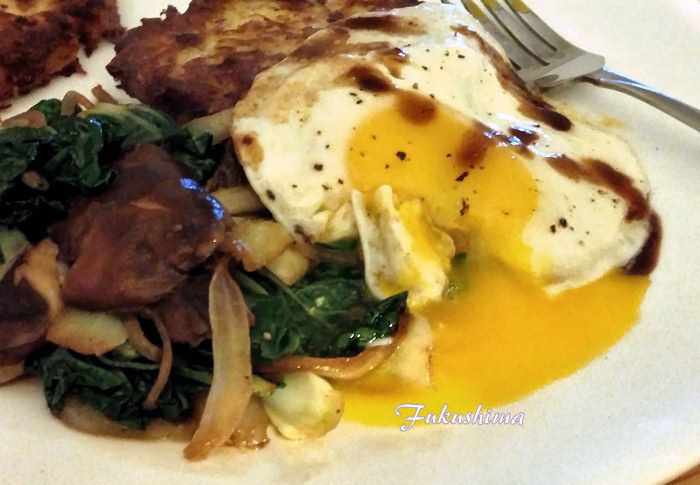
Plate latkes, place greens alongside, or on top, but, that ruins the crispy latke. Then top with a fried egg. I added a little Tonkatsu Sauce, cause I love the stuff.


It was an excellent combination. The egg was probably overkill, but, added a richness and moisture and who doesn't love a fried egg? The vegetal and savory nature of the pak choi and soft texture of the mushrooms and egg worked beautifully to contrast the crispy latkes.

Sunday, December 2, 2012

Croquettes

I was browsing the produce aisle at one of my favorite markets, and chanced upon two ingredients that really shined, one was baby broccoli and the other were these great looking organic Russet potatoes. A note on that, in general, if I am cooking, I really work at buying roots and tubers that are organic, I feel that in particular, these crops benefit from the practices that small organic farmers provide for these crops. These Russets looked so good, it was clearly time for croquettes.

The Japanese love croquettes, and these are the types that I love to make. Typically aromatics and vegetables support a meat, blended into the mashed potatoes and then panko-coated and deep fried.These have finely chopped onions, finely minced garlic, and some line caught albacore tune. I prefer the taste of albacore, and smaller line caught tuna offer benefits of lower mercury and lower impact on fisheries. I also added an egg for binding.

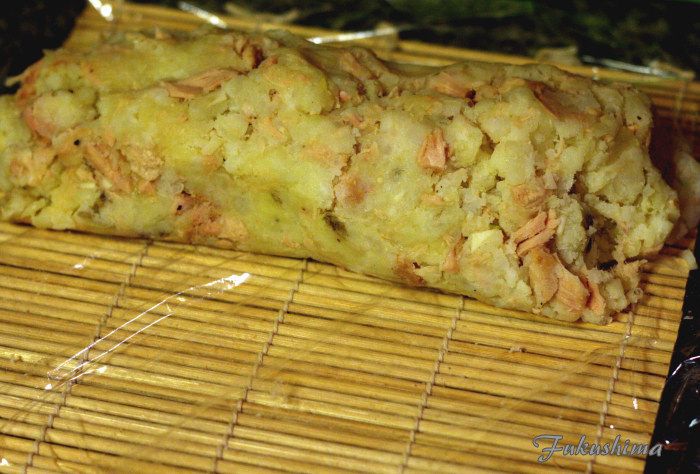
Potato mixture on Sushi-su

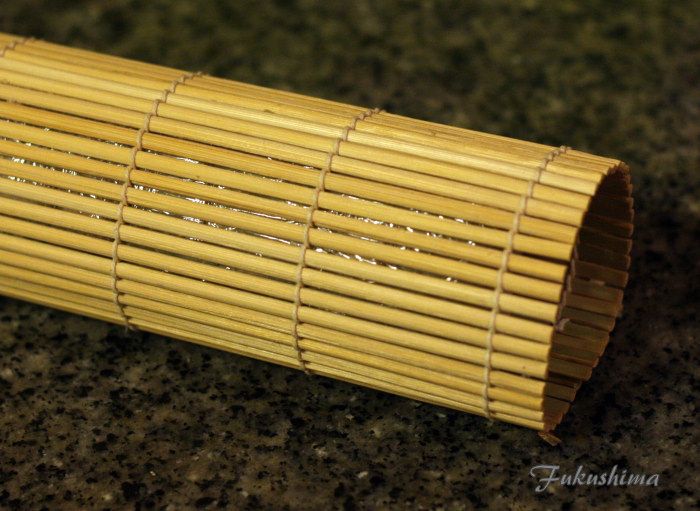
The potato mash was prepared, and I added a little butter, fine sea salt and ground pepper, the potato has to taste good first, then everything else was added. One of the tricks I like to use to shape and make the process of breading easier is to form the potato mixture into a tube, I use my sushi-su for this, it really comes in handy for so many tasks other than rolling sushi. I then refrigerate the potato mixture to firm it up.

Rolled and chilled


Once it has gotten cold, I press it into a form, or simply mash then roll while still in the sushi-su, so that it is oval shaped. Then it is simple to slice, flour, egg wash and panko. I let the panko-coated croquettes rest so the breading will bind to the potato. This helps keep the coating attached to the potato. Once shaped and rested, the croquettes were shallow fried in grapeseed oil and canola oil, the key is to keep the oil at a moderate heat. It has to cook through the potato and heat everything while not over-browning. After frying, the croquettes are drained.

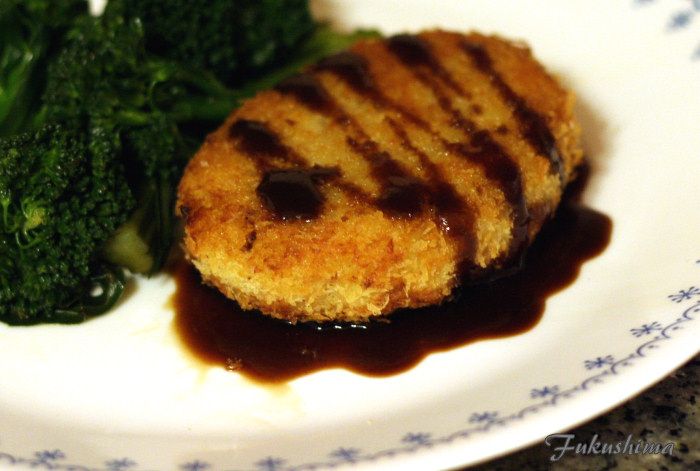
Plated with Tonkatsu sauce

I plated the croquettes with the baby broccoli, which was steamed until just soft, then chilled in a mixture of shoyu, sugar, togarashi infused toasted sesame oil and a little sherry. This is served ice cold to offset the hot, rich and aromatic croquette. A little tonkatsu sauce rounds out the plate.

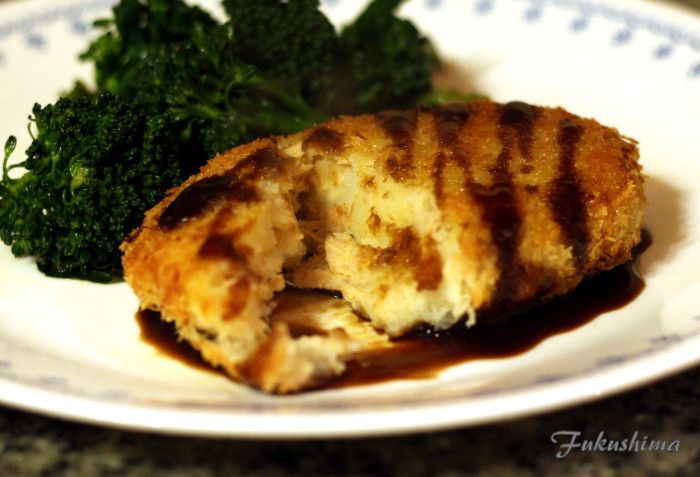
The interior, buttery, aromatic


The texture of my croquettes are a little rustic, I don't like super smooth ones. The contrast of the cold greens with the hot croquettes covers so many flavors and textures, a perfect riff on a modern Japanese snack classic.

Croquettes:
4 medium Russet potatoes
1 tablespoon sweet butter
1/2 cup onion (I used a yellow onion) finely chopped (1/8:)
1 large clove garlic, minced to paste

1 can albacore tuna (I used Wild Planet Line Caught Albacore)
Fine sea salt and fresh ground black pepper to taste
1 egg

Steam potatoes until softened and easily mashed. Mash by squeezing to create a lumpy texture. Add next four ingredients and combine gently. Add flaked albacore and taste, correct for salt and pepper. It has to taste good at this point. Add 1 beaten egg, I like to add a teaspoon of water to the egg and then beat with a fork. The water helps the egg combine smoothly.

Wrap in plastic wrap, and form into a roll. Refrigerate until potato sets. Once the potato is set, roll in to form a oval tube and slice, or press into oval croquette forms. Dredge slices in flour, then brush with egg whites, and dredge in panko. Allow to sit for 15 minutes to 30 minutes.

Shallow fry in moderately hot oil until golden brown on one side, flip and finish cooking. Drain and serve.