Search This Blog

Sunday, March 18, 2012

Cod and Prawns, Pan-Asian style

After nearly a week of eating that smoked corned beef in one iteration or another, it was time for a change. I decided something Asian was good, and Salt and Pepper prawns sounded like the ticket. Then at breakfast, the idea of Vietnamese Pork Chops came up. Well...hmmm....Pan-Asian then.

Pan-Asian Cod and Shrimp

First off, the green beans, I wanted dry-fried style green beans but with my own riff.

Ingredients:
1/2 pound green beans
1 teapoon ginger, minced
1 teaspoon garlic, minced
1 tablespoon scallion, white part, chopped
1 tablespoon Red Boat fish sauce
1/2 teaspoon dark soy sauce
1/2 teaspoon Hoisin saice
1/4 teaspoon coarse turbinado sugar
1/2 teaspoon black pepper
1/2 teaspoon chile powder

Mix the last 5 ingredients and set aside. Saute the green beans in a well-seasoned wok, no oil. The beans should cook until slightly wilted. Remove from pan and add aromatics and one teaspoon of high heat oil. Fry briefly until aroma is released, do not burn garlic. Quickly add reserved liquid blend, then add beans and heat through. Serve hot.
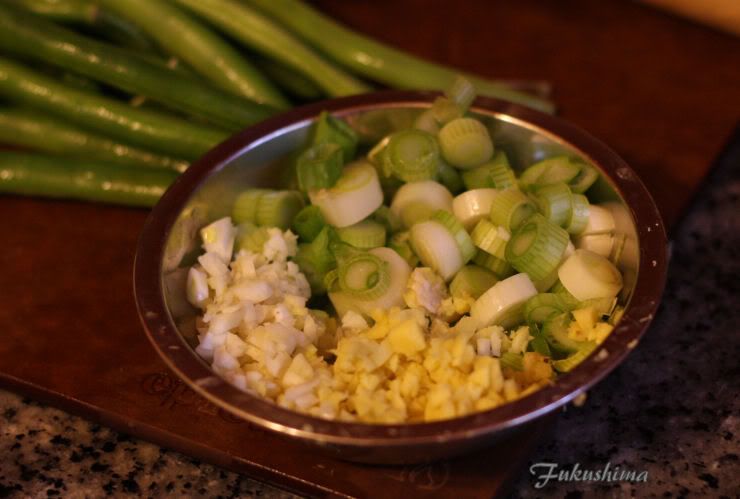
Bean aromatics
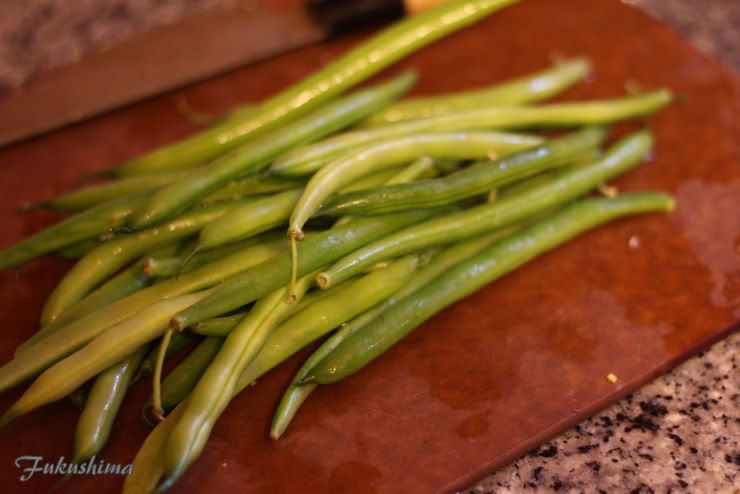
Lovely Beans

For the main protein of the meal, I ended up going with the cod and prawns I planned for salt and pepper preparation, but, added a few more flavors that would be reminiscent of Vietnamese pork cooking, minus the caramelization. So, fish sauce, palm sugar and lemongrass found it's way into the marinade.

Cod and Prawn-Pan-Asian flavor

Feesh and shreemp:
1/2 pound wild prawns
2/3 pound true cod

Marinade:
2 stalks lemongrass, tender center only, 2" sections
1 teaspoon ginger
1 teaspoon garlic
2 tablespoons scallions, white parts only, in 2" sections
1/2 teaspoon sesame oil
1 teaspoon olive oil or other oil
1 tablespoon white balsamic vinegar
1 teaspoon palm sugar syrup
4 tablespoons Red Boat fish sauce
1/4 cup white port
1/4 cup water

Clean shrimp and make sure cod is boneless and cut into chunks. Reserve. Taking just the tender parts of the lemongrass, the white part of scallions, peeled garlic and ginger (peeling not really necessary) and crush in a bowl. Add all other marinade ingredients and muddle.

Add 1/2 of marinade into plastic bags, add cod and shrimp separately into each bag. Marinate for at least 2 hours. The meat will dehydrate due to salt in the marinade, then draw in marinade, this takes at least 2 hours.
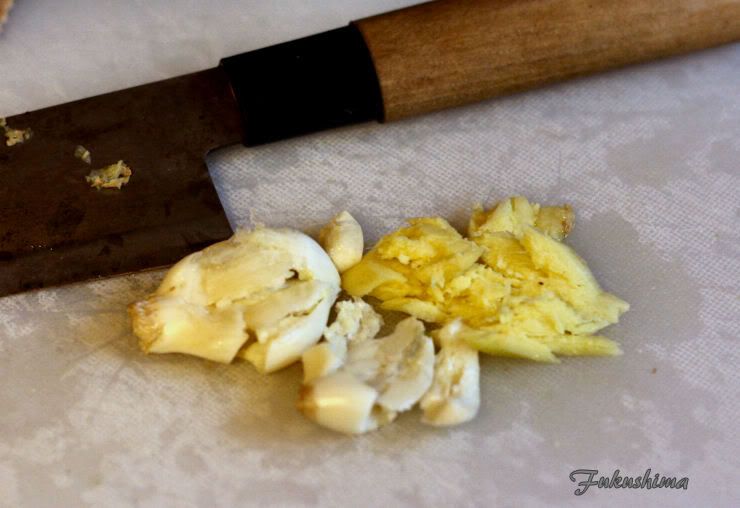
Crushed garlic and ginger
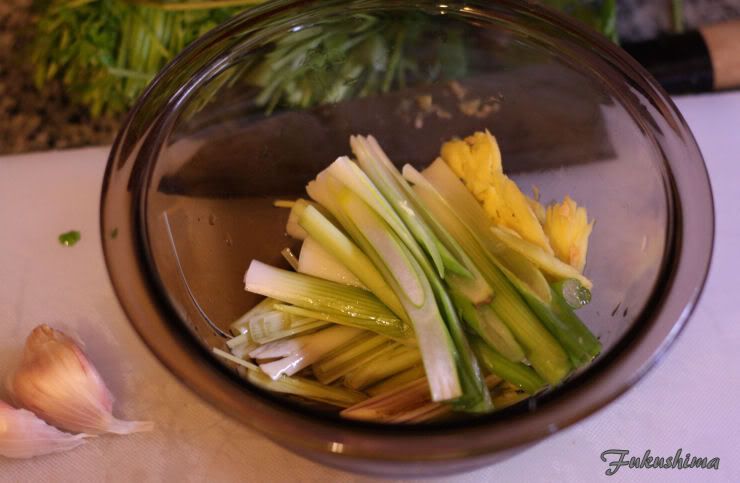
Lemongrass, Scallion
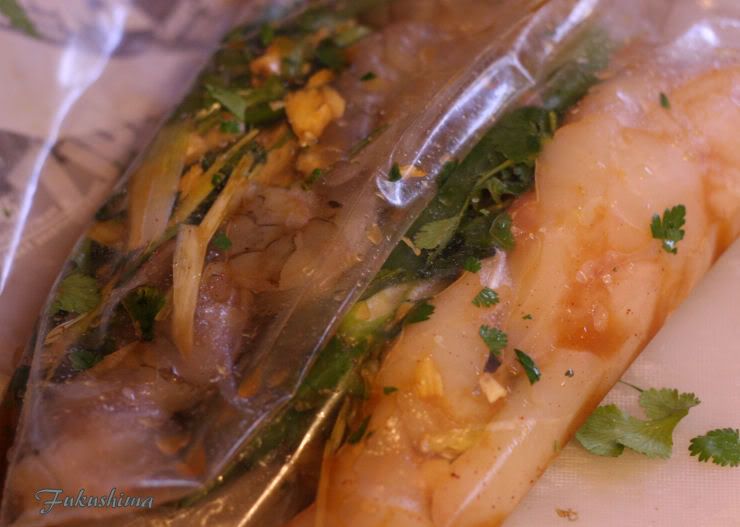
In the marinade

Coating:
3 tablespoons pastry flour
3 tablespoons corn starch
1/2 teaspoon black pepper, chile powder, salt

Frying Stuff:
1/4 cup high heat oil, safflower or sunflower seed, peanut, what have you
1 teaspoon of garlic, ginger and white scallion
1/2 teaspoon or more sliced serrano or Thai red chile (you will note I forgot to buy these)

Remove fish and shrimp from marinade, they will feel a little dense, this is fine. Dredge in coating, then shake loose. The meat should be barely coated. Heat oil in wok, place shrimp in first, then fish, fry until crisp. Smaller woks mnay require more than one frying session. No worries. Once fish and shrimp is fried, add a little more oil, fry aromatics until aroma is released, add fish and shrimp back in, toss to heat. Serve immediately.
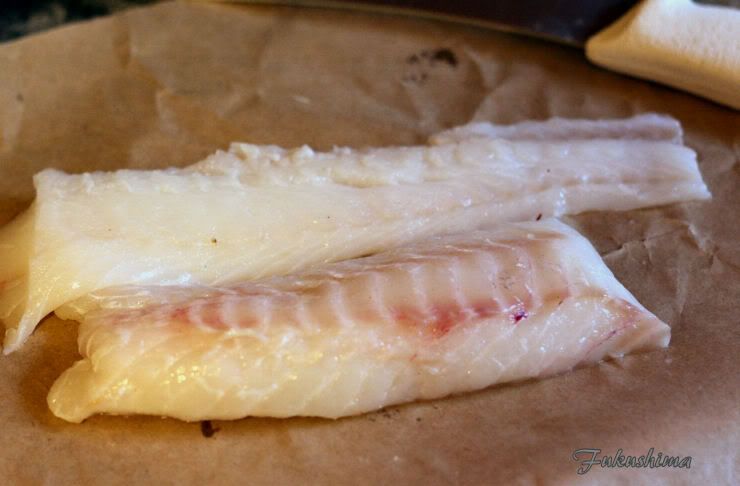
Cod filets
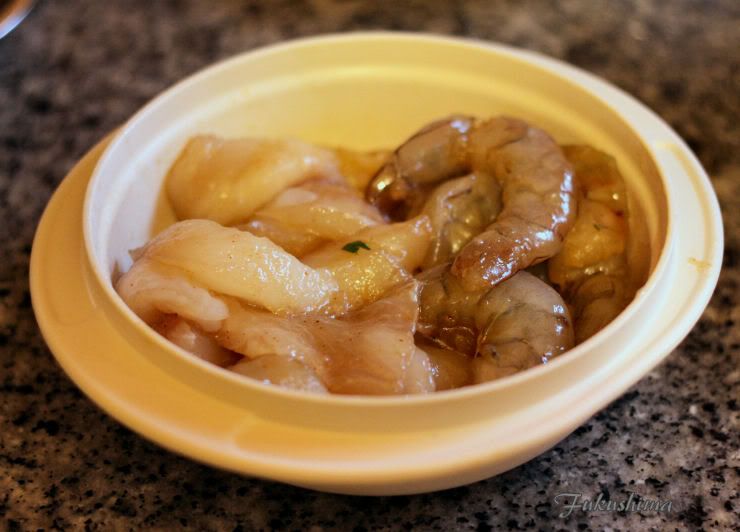
Out of the marinade
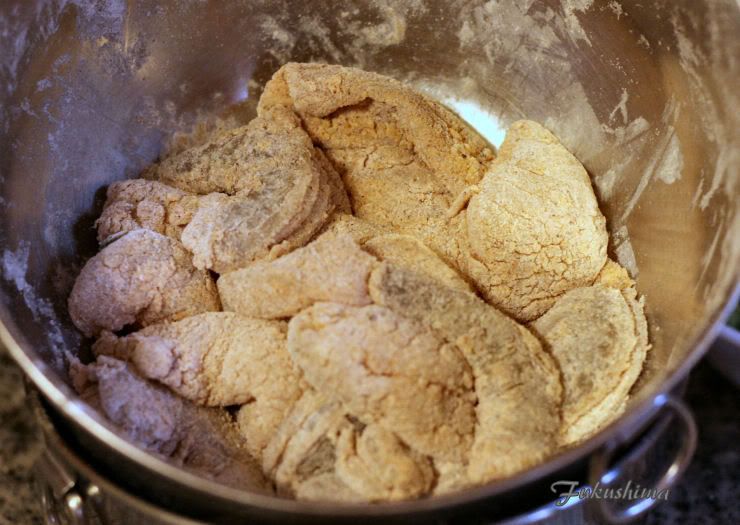
Coated Fish and Shrimp
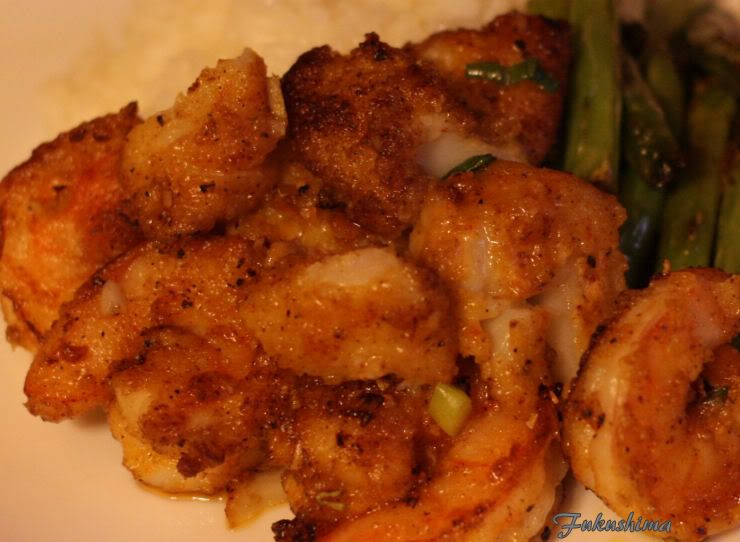
The Close-up

 This was all served with white rice, even though the ingredients echoed throughout the two dishes, the flavors really took on distinct flavors as the beans, cod and shrimp each flavored the supporting flavors independently. This was the goal of marinating seperately, making quick cook changed and not really frying things all together. I really need to make shopping lists, as the chiles were missed. Even some jalapenos would have worked.

Wednesday, March 14, 2012

Smoked Corned Beef Sushi?

I decided to make some corned beef smoked in the kettle as an early celebration of St. Patricks Day. Plus, a little pseudo pastrami is always tasty. I have to give a shout out to my friend Thirdeye at Playing with Fire and Smoke, his blog has some great recipes and tutorials on cooking over live fire. I borrowed liberally from his blog to cook the corned beef.


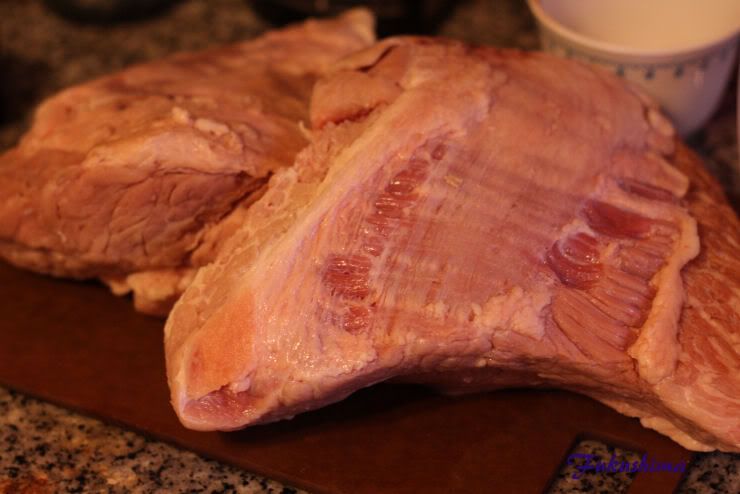
Soaked Corned Beef

I started off with a couple of pieces of commercially available corned beef, which I soaked in clean water for 2 days. I ended up changing out the water 4 times during that period of time. The final soak ended with the water having almost no detectable pink color, which I took to mean the curing salts had leached out as much as possible.

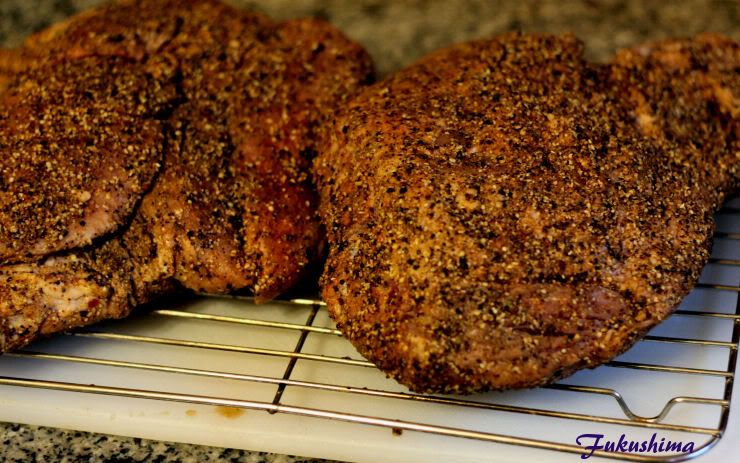
I prepared a rub using the packet of spices from one of the corned beef packages, which I ran through the grinder on a medium setting. I added medium grind black pepper, ground allspice, ground cloves, ground mustard and palm sugar. To be honest, I did not measure them all, but, black pepper was probably 2/3 of the total blend. This was rubbed onto the soaked and dried corned beef chunks.

Rubbed Corned Beef

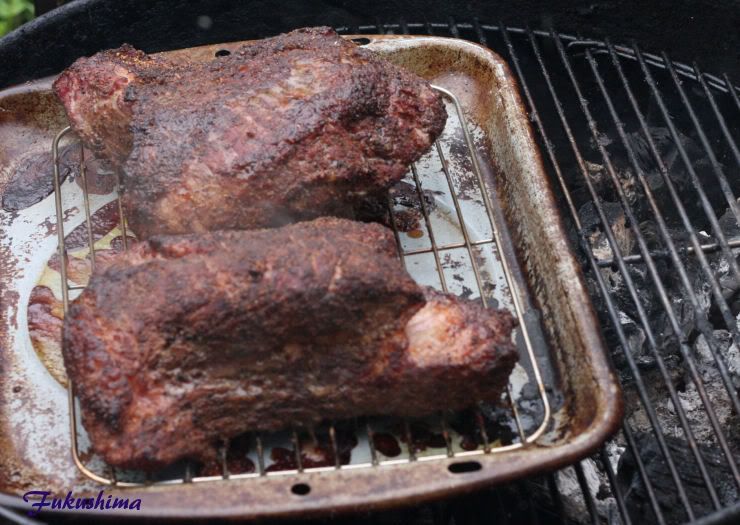
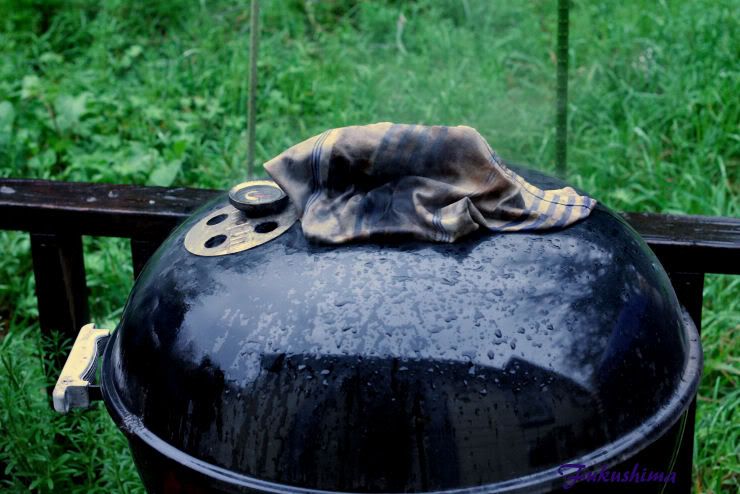
The corned beef was put onto the kettle, which was running along at 225F, in the rain, so moisture inside the kettle was not going to be a problem. This ran for 3 hours at 225F until the internal temperature was 150F. I decided to put the meat on a rack in a shallow pan, this was to provide a little bit of heat shielding during the unfoiled portion of the cook.

Meat at 150F

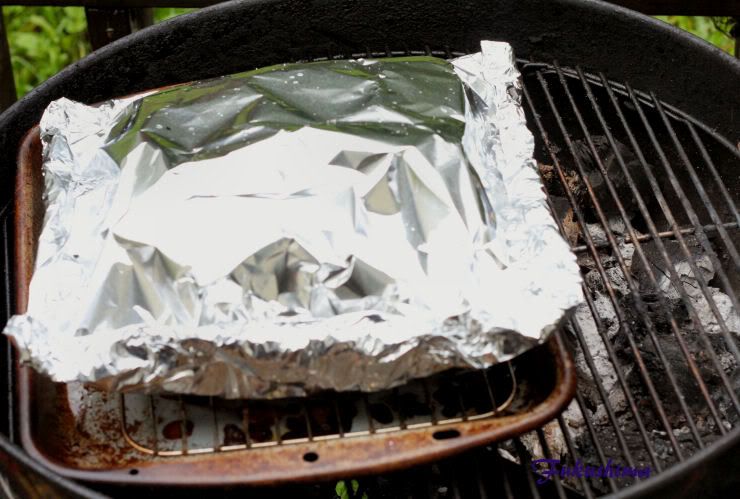
The meat was then wrapped in foil, and some moisture was added to keep things from burning or getting too dry inside the foil. The liquid ended up being 1/8 cup each of Red Boat Fish Sauce and liquid amino acids and 1/4 cup of water. My hope was to add some additional flavor and get that umami punch from the fish sauce and amino acids.

Raining, who stops cooking


In the foil
The meat cooked in the foil for 1 hour at 225F, then I shut down the cooker and let it coast to a rest for 30 minutes. The meat was then pulled and allowed to rest without the steam. Initially, there was a whiff of the fish sauce which was a little concering, but, it dissappated and was replaced with the aroma of apple smoke and pastrami.

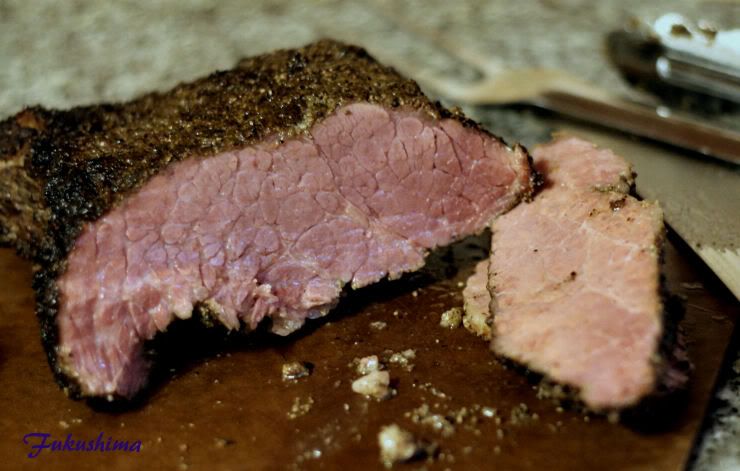
Sliced Smoked Corned Beef
Here is a shot of the sliced corned beef, showing the pink color and the breakdown of the connective tissue. This was looking good. But, I forgot to buy bread. Problem, solved since I love rice with corned beef, why not with smoked corned beef?

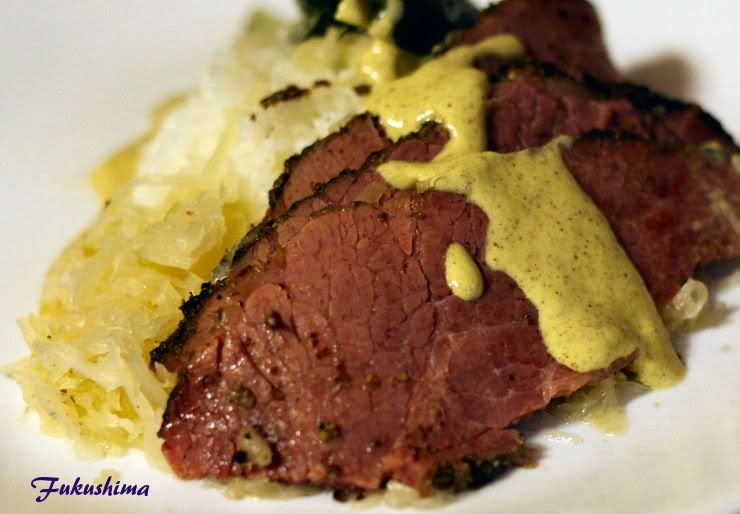
Plated

Why not a deconstructed pastrami sandwich, with rice instead of bread. I did make a nice mustard sauce, with a little mayo, hot sauce, sauerkraut juice blended in. It has a nice mustard and chile bite. The sauerkraut was added in, some steamed rice and the smoked corned beef. This was a good plate of food. Then it hit me...

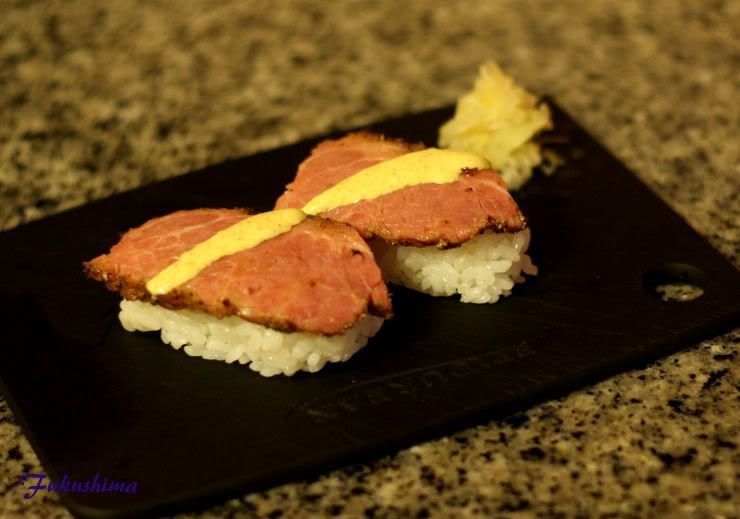
Really? Sushi?
Only a lunatic would think this was a good idea, but, it seemed like a little quick work with some coconut infused white balsamic vinegar would give the necessary sugar and sour bite to make some sushi rice. Then a little mustard sauce on the rice, some slices and then a drape of the same mustard sauce. A little sauerkraut in place of grated daikon and there you go. Weird, yes, indeed, but it tasted really good.

Wednesday, February 22, 2012

Portland Food Adventure

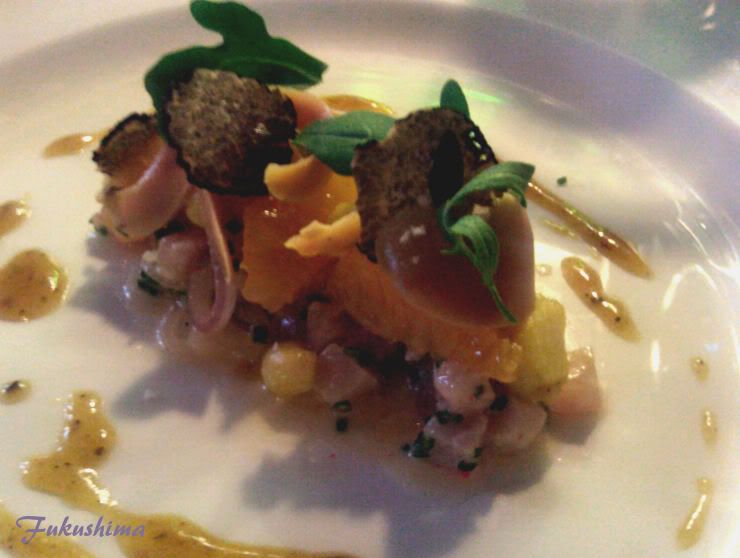
I recently had a reason to make a visit to Portland which ended up being conveniently timed with a visit by my friend Rob, with whom, I normally travel around the Bay Area experiencing the food scene. In this case, we found ourselves in Portland with somewhat open schedules. It was time to wander about and find some food. The real start was Le Pigeon, with Chef Gabriel Rucker at the helm, we got to sit at the side counter and see all of the cooking fall into place. Here are a few highlights of a 7 course tasting menu. And yes, the photos are terrible. I used my phone with no flash, it was not up to the task.

Hamachi Tartare, salt-cured foie gras, truffle, macadamia nut

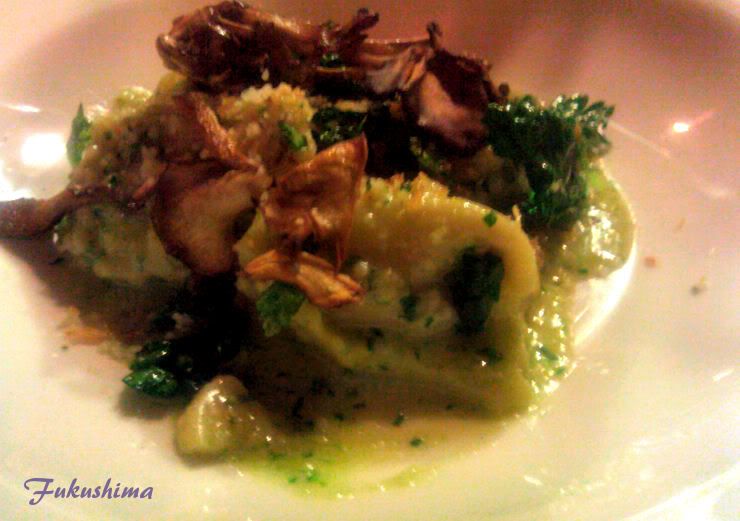
Agnolotti, parsley, garlic, crispy Maitake mushroom

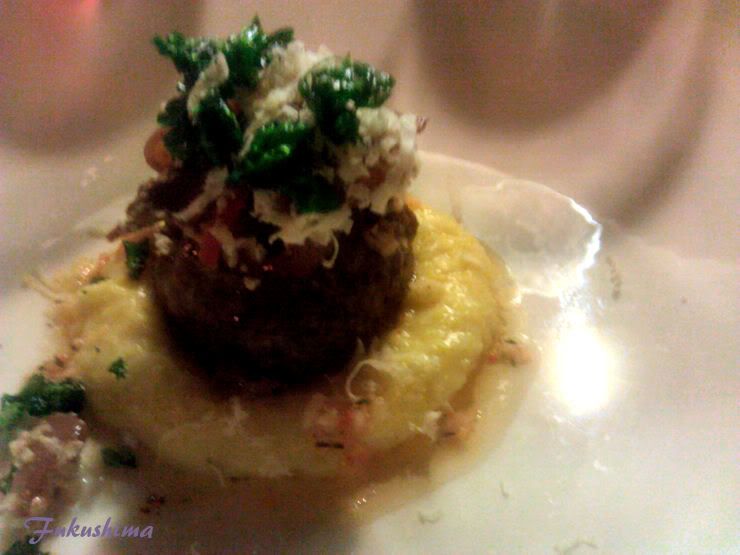
Venison chuck and heart meatloaf, polenta, horseradish, balsamic onions

There were other dishes, including a two-for-one dessert course and a nifty little cheese plate at the end of the main course, which was a deft and flavorful way to prepare the palate for trhe Foie gras ice cream, profiterole and Amarone Cherries on custard. And in this case, given a limit of $200 for wine to match all of the courses, the somellier provided us with a split of Gruner veltliner and a lovely Rhone blend which worked well across the board. Each dish at Le Pigeon was perfectly executed and rang of flavor and technique, it was a perfect dinner. I believe the cooking and presentation here would hold up in San Francisco easily, which might not be the best thing for a person in Portland to hear, but, anyone who cares about food would appreciate what I am saying here.

We also found ourselves in a wandering mood and hit the following places:

Eat, an Oyster Bar, for some terrific oysters and a brew, Vaporizer, which was not only a perfect choice with oysters (not and easy pairing) but, is local to Oregon.

PokPok, for some of their justifiably famous wings.

Pine State Biscuits, for a fried chicken biscuit sandwich and a corndog, both cheap and good eating.

Wafu, for some tonkotsu ramen, using house made stock and ramen noodles, an amazing rendition of crispy pork belly bao and maybe the best kale dish, Creamed Kale with Butter-braised Shiitake, I have ever had.

Woodman's Tavern, where we had the American Ham plate, which was wonderful, a smoked lentil salad (maybe the killer dish of this meal) and some roasted cauliflower. We also got to chat with the owner, who also owns Stumptown Coffee.

There was also a visit to Kettlemen's Bagels, before the now inevitable change from boiled 'N.Y. Style' bagels to Einstein Brothers version of bagels. These were dense and chewy with the thin skin and malty taste which will sadly be lacking very soon. I did get a picture of this.
Rather obviously, lox, cream cheese, onions, capers, chips and pickle

The food scene is quite distinct from that of San Francisco, the East Bay or Los Angeles. Of course, there is a focus on the fresh ingredients, local sourcing, fine preparations and interesting matching of flavors and textures. What is different is in the viewpoint of much of the food, with very fine dining and 'everyman' food combining to make a distinctly Portland cuisine, crossing back and forth over the line between ridiculously hearty food and fine dining. There is nothing quite like the charceuterie, fried potatoes and uber beer-friendly fine dining I found in Portland.

The other thing I would note, with the exception of a visit to Gruner (which I overslept for), all of these places exist in the avenues and streets that are not a part of the downtown scene. I have had amazing haute cuisine, Peruvian food, the best biscuits and gravy ever, terrific beer and all of it decentralized and within 100 feet of residences. It marvel, as someone who has been immersed in planning and design efforts to recreate commercial sectors in a somewhat New urbanist model, how Portland seems to be revelling in a New Urbanist ideal, which seems to have never left.

This is a food city that deserves to be on every food persons list for mutliple visits. This is a chronicle of one of three visits, yet, I have not even covered one area of the City that I could easily have ridden a bike to each of these experiences. I can't imagine what the other districts will hold.

Sunday, January 29, 2012

Huli-Huli-Katonk Chicken

I decided to cook a chicken today, but I wasn't planning on doing a UDS cook, so it had to be kettle cooking. But then! I was asked by a friend if I could fire up the UDS for some pastrami he had made, well, my back is wiped, but, if someone else does the lifting...why not

So I prepared smoked then grilled chicken, an odd combo, but, take a look.

First, my standard whole pasture raised, free range, air cooled, chicken, spatchcocked washed and rubbed.

Spatchcocked chicken


Rubbed up bird, here is sort of what I did.

2T medium black pepper, Phu Quoc Black pepper
2T kosher salt, Redmond Real Kosher salt
1P each dry mustard, clove, allspice, cinnamon, nutmeg, chile powder
each was a healthy pinch

Mix and applied over a rub of garlic and olive oil.

This was placed on the smoker for one hour at 225F. Then moved to the kettle running at 225F. It was cooked over indirect heat for 15 minutes, then the kettle was opened, coals spread over half of fire grate and it was cooked direct for 3 minutes per side. It was then put onto the side where the coals were not and cooked a final 10 minutes covered.


Onto the kettle and allowed to cook a little more, all this was done by feel. Each time I opened the lid, the bird got a baste of my glaze.

Bob's Katonk Huli-huli glaze:
1/2 cup coconut vinegar
1/2 cup shoyu (Japanese soy sauce)
1/4 cup Red Boat Fish Sauce
1/4 cup ground palm sugar
1/4 cup turbinado sugar (medium grain, not table sugar)
1 tablespoon ginger, fresh grated
1 star anise, whole

Heat to dissolve sugar and concentrate liquid, cook, it will be like a thin syrup. Glaze onto chicken as least 4 times.


Off of the kettle


Another angle
Not plated, but, put on napkins, cause this is street food, and there would be no plates.


Overall, this chicken was better than it looked, cooked just until medium, it was juicy and tender, the flavor has some great depth and just a little heat, the glaze was sticky and caramelized beautifully with just enough char to let you know fire was involved. About that name? Huli Huli Chicken is a standard of Hawaii that is rapidly being killed off by the same regulations that are making street food so difficult to maintain here, but, the katonk part? Well, I am not Hawaiian and I totally riffed the flavors with what I know of the Hawaiian palate, and I am a Katonk, ya know if ya know.

Sunday, January 15, 2012

Pulled Pork Waffle

I made some pulled pork, a very traditional version of hickory smoked pulled pork which I documented at Bob's Brew and Que. I decided to have a little fun and test out my new waffle iron which I received for Christmas.


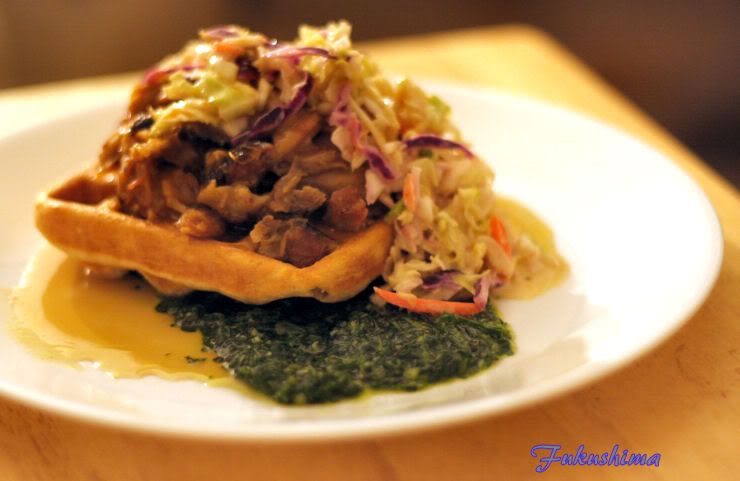
The overall look

I made a maple mustard BBQ sauce, which was this:
4T Cider Vinegar
2T BBQ sauce (I used Big Butz Original)
2T prepared mustard (Beaver Picnic Yellow)
3T maple syrup
1T ketchup
1t palm sugar

All mixed together and then poured into a pan with a handful of the pulled pork to heat and combine. After sauce reduced and got sticky, I added 3 tablespoons of water and let it heat through again.

I made a basic waffle batter, this was put onto the waffle iron and slightly overcooked beause I did not read the instructions. That would have helped.

I also made some pesto, which involved snipping some Italian parsley, baby arugula and grating some Grana Padano cheese into a bowl and going at it with some koshjer salt and olive oil to create an herbal mush, more olive oil and a clove of garlic which was 'cut' with some garlic. Basically, I like to take garlic, smash it, then cover it with salt and scrape the salt and garlic back and forth with a pastry scraper. It was all then pounded into submission with a pestel in a steel bowl.

I also made some cole slaw, it happened to be made with home made mayonnaise, as I was out of store bought and making it was easier than going and buying some. This was a very basic cabbage cole slaw with a cider vinegar pickle for one day, then dressed with the mayonnaise.


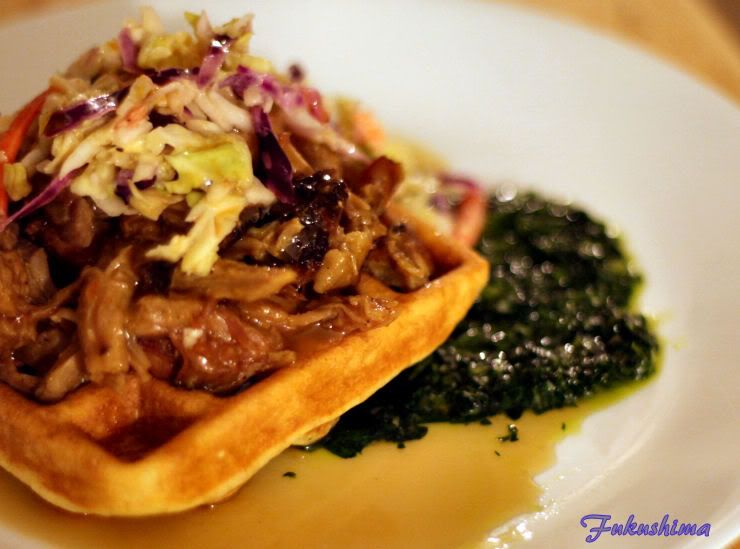
Close-up showing all the components

Anyways, it was all assembled and dressed up with a little maple syrup too. I decided the pesto would be a good herbal/savory counterpoint to all the sweet, the cole slaw was for crunch and a little bite, the pork and waffles because they are delicious.

Saturday, January 7, 2012

Pork Belly 2 ways

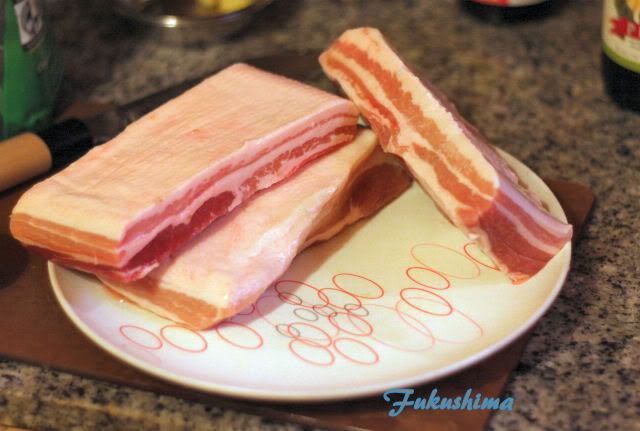
While perusing the Japanese food market for ingredients for my Osechi Ryori meals, I checked out the meat area, looking for high quality pork, and I was not disappointed. I found some nice chunks of Duroc Hog pork belly, perfectly sized for doing something with. I love hitting the Japanese market for pork, as the quality and variety of pork is almost always of a very high quality. This pork had glistening white fat, a nice deep pink flesh and when unwrapped, a nice clean smell.

Mmmm, Poooorrrkkkk

It made sense to do something with the smoker, then again, I really like Siew Yuk, the crispy skin pork belly becoming so popular these days. What I decided to do was go for something inbetween. I prepared a marinade of various Asian-ish ingredients and let the pork belly marinade in it. I did not score the meat, as I would have for siew yuk, I will probably go ahead and score it next time. I marinaded overnight and in the morning, removed it, scored the fat and let it air dry on a rack.
30 minutes into drying

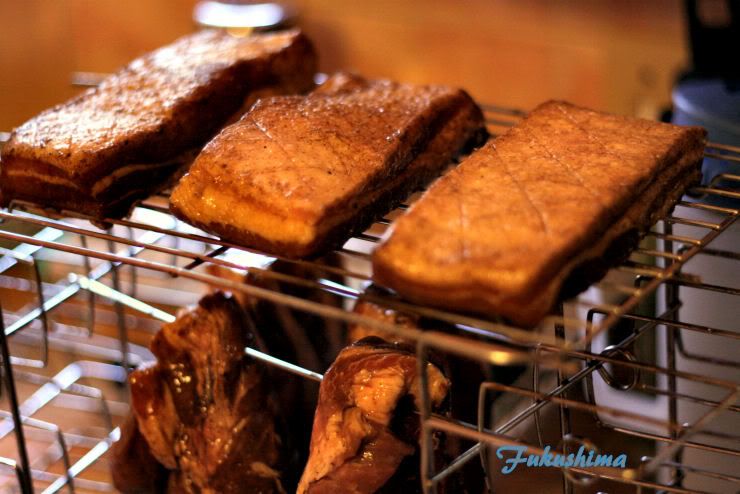
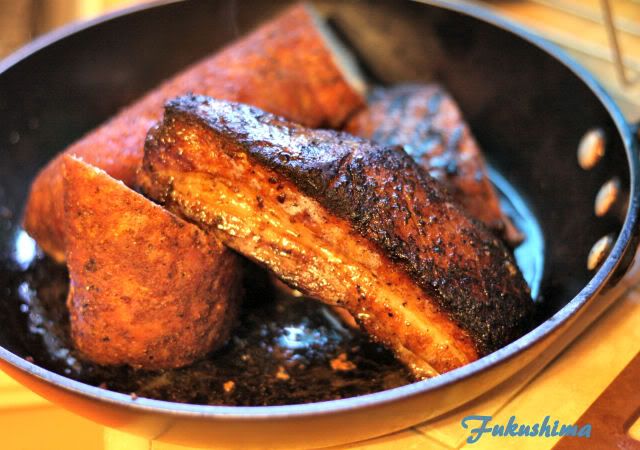
I heavily docked the fat with a small sharp skewer. Then wiped the fat clean to make sure there was no moisture and sprinkled equal amount of kosher salt and medium grained turbinado sugar onto the fat side. This was a light covering. I also prayed a little cider vinegar onto the fat. This all sat for 2 hours under a fan. I wanted to dry the surface as much as possible. I was already running the UDS at smoking temperature, somewhere around 235F or so,which would never do, so I fired up the kettle and got a nice small hot fire going. I took the belly pieces and put them fat side down over the hot fire for a couple of minutes, just to start the caramelization of the fat. It took very little time for each piece to become golden colored, I then put them into the UDS. It smoked for 3 hours over hickory. I pulled when the fat seemed to be fairly rendered.

Off the smoker

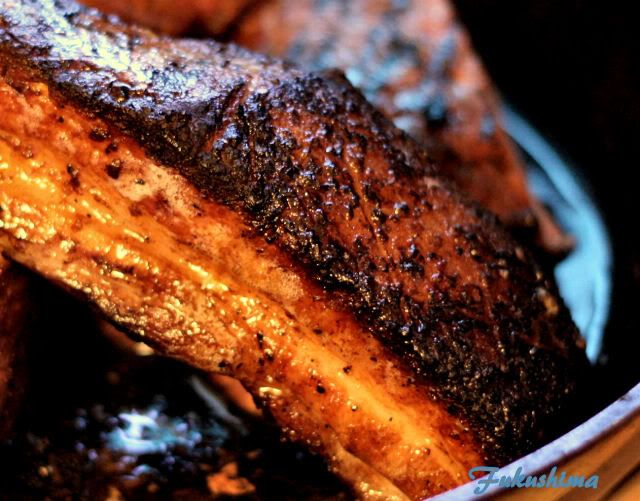
I believe it would have turned out better if I had scored the flesh, although, after the 3 hours in the smoker, the fat was almost confit like and the meat was very tender. The top of the fat got nice and crispy and it had the flavor of a light hickory smoke. The close up...
Note texture and crisp top

I hope this photo shows that the fat has rendered and the fat cap has fully caramelized, with the darker parts offering a slightly bitter counterpoint to the earthy hickory smoke and sweet pork. I served two of the pork belly chunks by simply chopping them up and dusting them with a coarse textured turbinado sugar (what? you don't keep multiple sized grains of 3 or 4 types of sugar in your house?) and putting them out on a plate. This would have been really good with some plum sauce.

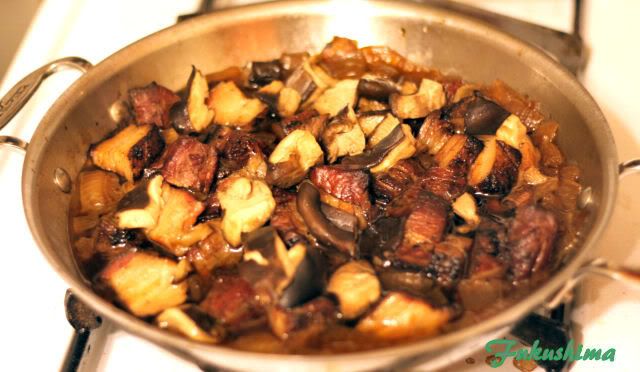
I also braised some pork belly, I need to see if I have any info on what I did with that.

Asian-ish marinade

1/8 cup shoyu
2 tablespoons Hoisin sauce
2 tablespoons or so of white port, sherry or whiskey (I used white port)
1/2 teaspoon sesame oil (untoasted, expeller pressed)
1 large pinch Phu Quoc black pepper, fine grind (fresh ground)
1 star anise piece (whole, use a good large one)
1/4 teaspoon each cinnamon, clove, allspice, nutmeg (untoasted, fresh ground if possible)

Blend all ingredients in marinading vessel (plastic bag for me) and add meat. Shake and turn bag at least 2 times during a marinde time of 4 to 6 hours. Opp, found it, I added the pork belly, along with some bamboo shoot, shiitake mushrooms, chicken stock, bonito stock and some green onions to a brasier and let it braise in the oven for 2 hgours. This is an umami and fat bomb of a dish. I find all of this post to be too much for me nowadays, but, it seems many can still eat more than a couple of chunks or a spoonful. Here is that braised dish.

Tuesday, January 3, 2012

Grilled Tai (Sea Bream)

This year, I offered to host New Years at my house, in large part, this was an idea formulated by my sister and I to let the kids spend some time with our aunts, the last of their generation. Family is quite important to us, and the feeling not only of family, but, of the connections and succession of the generations is something that we consider to be very important. Since we were doing something special, we had gone to the Japanese supermarket to get some groceries, and we saw fresh from Japan, Red Sea Bream, something you rarely see whole and very fresh here.

The raw fish had clear full eyes and fresh gills, it was clearly not very old. It also had been caught and prepared in Japan, which suggested that the fish had rested properly as it flew here. We decided, since it was so fresh, and somewhat pricey, a simple preparation was in order. The fish was taken from ice, stuffed with negi, which is a large Japanese green onion, some lemon and mitsuba, a distinctive flavor of Japanese foods. We then prepared a glaze of shoyu (soy sauce), sake, rice wine vinegar and sugar. This would be brushed on at the last minute to add a finishing sweet/sour note.

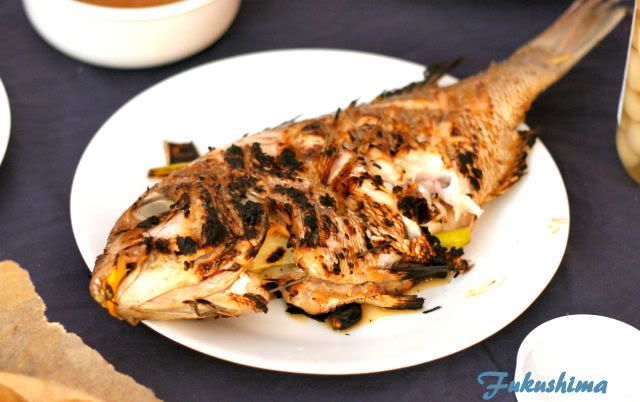
Grilled Tai, with a Ginger Shoytu glaze

The fish was given the traditional cross score on the skin, placed in a grilling rack and grilled fast over a hot bed of coals. I had arranged the coals with hotter coals in the middle and just below where the head would be, cooler coals at the thinner tail end. This was to cook the fish more evenly. There are no pictuers as I had three fires going and just needed to focus on not messing up a pricey little 'feesh'.

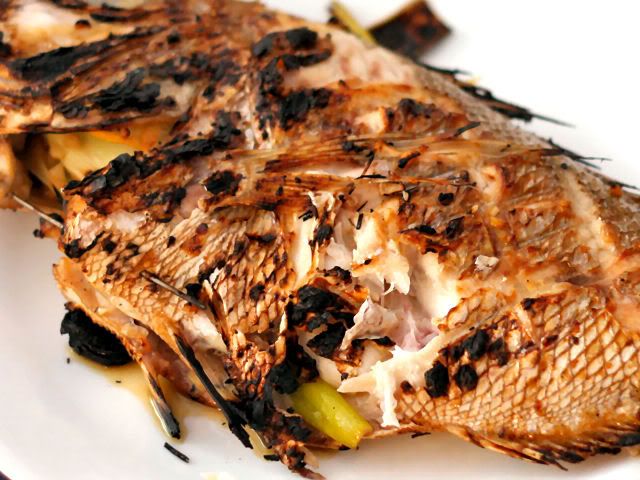
Detail of meat

It was grilled 4 minites per side, glazing the almost done side while the other side cooked, flipping to cook glasze and glazing the second side, then flipping to cook the glaze, it was plated and served hot. All that was left as a few bones and the skull. A successful grilled whole fish. If you look, the tail looks barely cooked, to me, this means the tail was cooked properly, the entire fish was done to just past rare at the bones, hopefully in that detail shot, you can see the meat is not opaque, it is still a little translucent. It felt good as I rarely cook this way, getting it right was a thrill...I don't acutally eat fish.